ESL Video Lessons That Actually Engage Non-English Speakers
Last Updated




Jump to section
Jump to section

Share
Share
Share

AI Video Translator, Localization, and Dubbing Tool
Try it out for Free
Picture this: You're teaching a grammar lesson to your ESL class. Your video explanation is clear, the examples are perfect, but half your students sit there confused. It's not because the lesson is too hard—they just can't fully understand English yet.
This happens in ESL classrooms everywhere. Students want to learn, but language barriers get in the way. They miss important details, fall behind their classmates, and lose confidence. Meanwhile, you're searching for solutions that actually work without breaking your budget or taking months to create.
Automatic dubbing changes this game completely. Imagine taking your lesson video and, within hours, having the same content available in Spanish, Mandarin, Arabic, or any language your students speak at home. Not subtitles they have to read while trying to watch—but a real voice explaining the lesson in their language.
Here's what makes it powerful: the technology now sounds natural, keeps your teaching style, and reduces production complexity compared to traditional studio dubbing. You record once, and every student in your classroom gets access to learning that makes sense to them.
In this article, you'll discover how automatic dubbing helps multilingual students understand lessons better, why voice quality and pacing matter more than you think, and practical steps to adapt your videos the right way.
Language Barriers in ESL Education
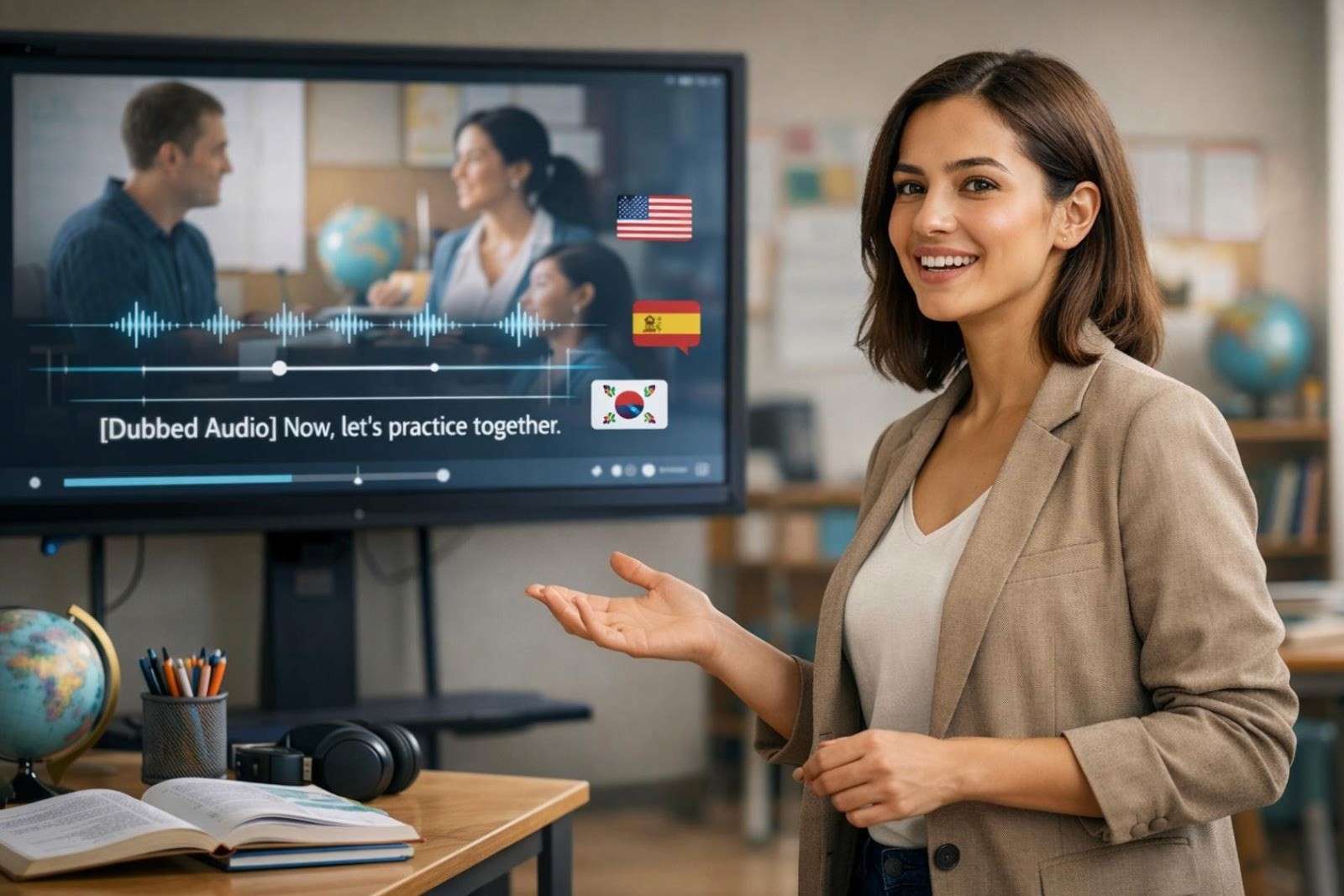
Language barriers aren't just minor bumps in the road—they're major obstacles that affect learning every single day. According to data from the U.S. Census Bureau, a significant portion of school-aged children in the United States speak a language other than English at home, creating daily comprehension challenges in classrooms. That's millions of students trying to understand lessons in a language they're still learning.
The numbers tell a powerful story. Surveys consistently show that a large majority of teachers have worked with ESL students in recent years, and many report concerns about language barriers preventing effective learning. When students can't fully understand the language of instruction, they face challenges across every subject—not just English class.
Here's what actually happens in classrooms: Students miss key phrases but stay silent. They struggle to follow video lessons because the pace feels too fast or the vocabulary is too complex. Even when they can read words correctly, comprehension lags far behind their native-speaking classmates.Research consistently highlights persistent comprehension gaps between native speakers and second-language learners.
The frustration builds on both sides. Teachers want to help but often lack the right tools or materials to support multilingual learners effectively. Meanwhile, students fall further behind, losing confidence with each lesson they can't fully grasp.
How Automatic Dubbing Supports Comprehension
When students hear lessons in their native language, something remarkable happens: their brains stop struggling and start learning. Educational research consistently suggests that students learn more effectively when instruction is delivered in a language they fully understand.
Automatic dubbing delivers this advantage through spoken instruction rather than forcing students to rely on subtitles or text translation. Here's why it works:
Reduced cognitive load: Students don't waste mental energy translating words in their heads while trying to understand concepts
Better retention: Learners remember information more effectively when they hear it in their native language
Faster comprehension: Complex ideas become clearer when explained in a familiar language
Less learning fatigue: Processing content in a non-native language causes mental exhaustion—dubbing removes this strain
The impact shows up quickly in classrooms. Students who previously sat quietly because they weren't confident suddenly start participating and asking questions. Platforms using AI dubbing often observe stronger engagement and improved completion patterns in non-English markets.
Instead of mentally translating while taking notes, learners can concentrate on the idea itself. Confidence improves first. Participation follows.
Multimodal learning enhances this effect even further. When students can listen to dubbed audio and read captions simultaneously, comprehension often improves consistently - especially for language learners who process information through multiple channels.
Voice Clarity and Pacing
Not all dubbed videos work equally well for ESL students. The quality of the voice matters just as much as the language itself. When AI-generated voices sound robotic or unclear, students lose focus and comprehension drops—even if they understand the language being spoken.
What Makes Voice Quality Effective
Modern AI dubbing has improved dramatically, but educators need to look for specific qualities:
Clear pronunciation: Every word should sound distinct, with proper consonant and vowel articulation
Natural intonation: The voice should rise and fall naturally, not sound flat or monotone
Appropriate stress patterns: Important words need emphasis so students know what to focus on
Clean audio: No background noise, clicks, or pops that distract from the content
The research backs this up. Research suggests that learners exposed to clear, well-paced audio tend to show improvement in pronunciation and listening clarity over time.
Getting the Pacing Right
Speed matters more than most educators realize. Here's what happens at different pacing levels:
Too fast: Students miss key phrases and can't process information quickly enough
Too slow: Learners get bored and disengage from the content
Just right: Students follow comfortably while staying mentally active
The tempo at which stressed words are spoken—not just overall words per minute—determines how well students comprehend spoken content.
For ESL contexts, slightly slower than native speech often works best. This gives students time to process meaning without feeling talked down to. The ideal pacing maintains natural rhythm while allowing learners to catch every important word.
Human-level voice quality has become achievable with today's AI dubbing technology. When voices replicate human warmth and clarity, they create stronger emotional connections with learners—making complex concepts easier to understand and remember.
Example: Adapting Educational Videos for Multilingual Learners
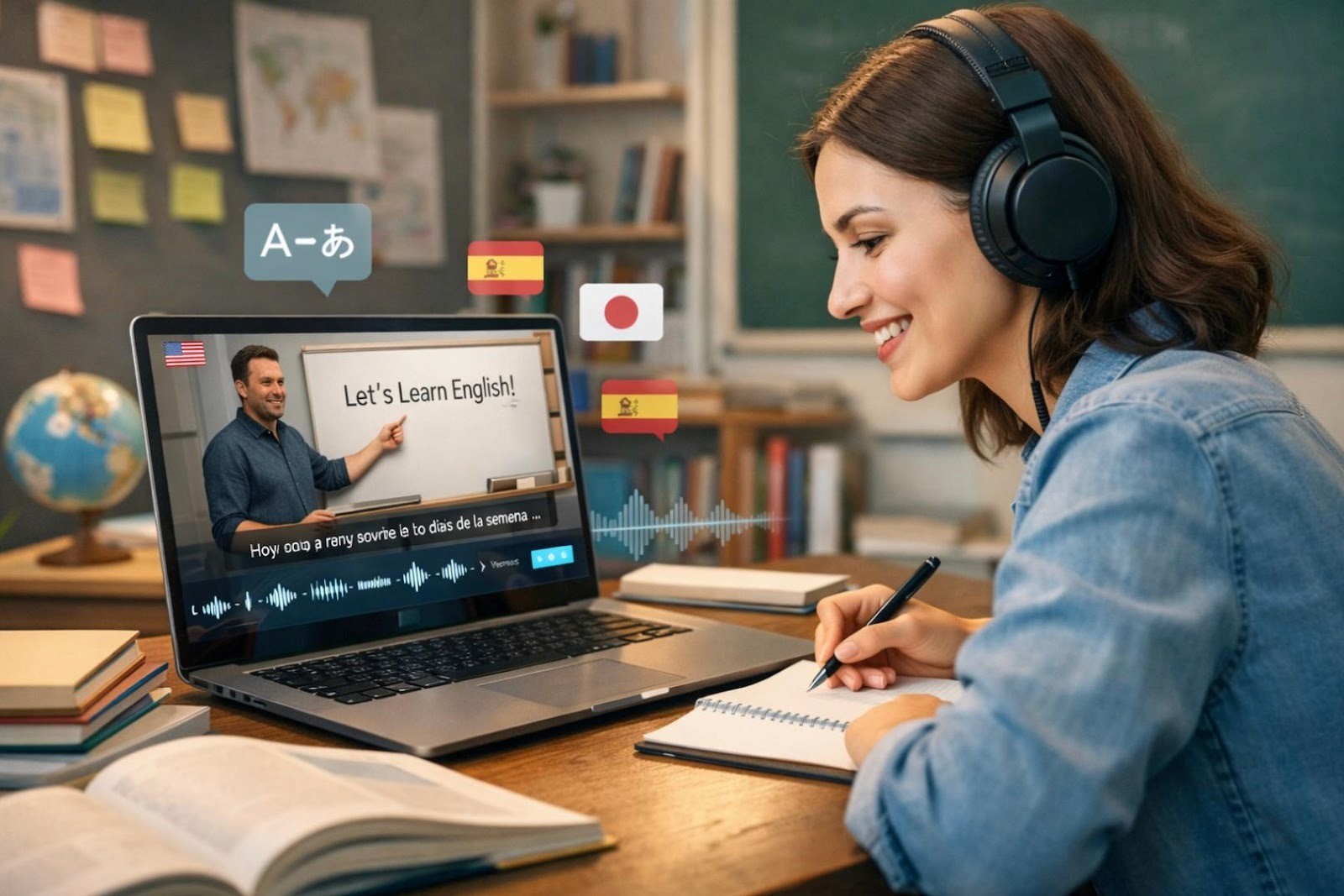
Consider an online learning platform that needed to make its math and science lessons accessible to students in a region where English accents created comprehension friction.
Teachers observed that students were spending extra mental energy processing pronunciation rather than focusing on the subject matter itself.
Instead of relying on traditional studio dubbing, the platform used automatic dubbing to:
Upload existing lesson videos
Select a regionally familiar voice style
Generate synchronized dubbed audio
Review and refine for clarity and terminology accuracy
The result was faster turnaround, reduced production complexity, and improved learner comfort with the material.
Students reported that lessons felt clearer and easier to follow when delivered in a familiar voice style.
What changed for students? The familiar accent removed barriers immediately. Teachers reported that complex topics became easier to understand, students stayed focused longer, and participation increased because learners felt more confident.
A familiar regional accent removed the subconscious barrier of understanding foreign voiceovers—making lessons instantly clearer and easier to follow.
This wasn't just about changing languages—it was about matching the voice to the learners' needs. The AI-generated voices maintained natural pacing, proper emphasis on key terms, and cultural relevance that helped students connect with the material.
Best Practices for Educators
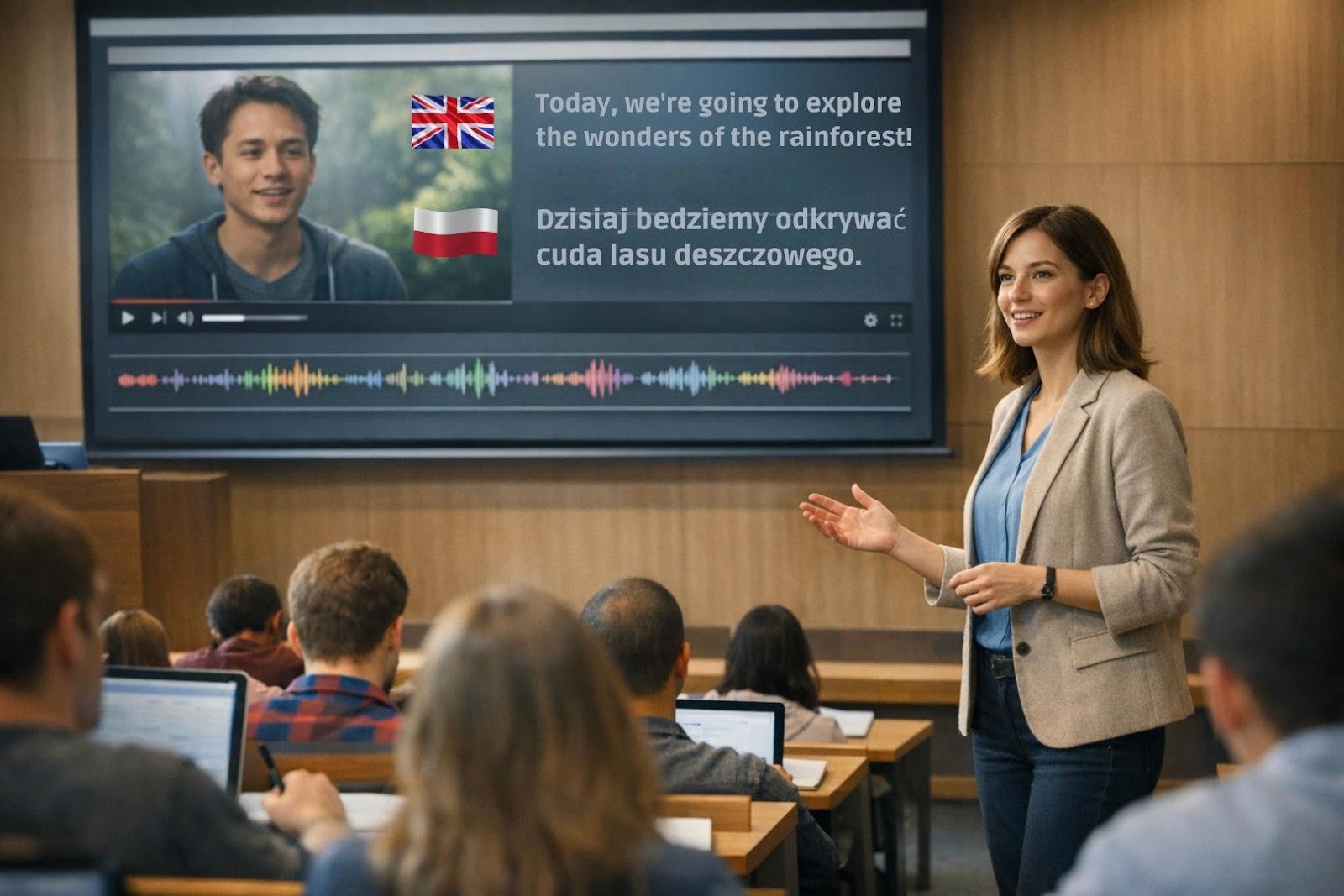
Ready to start using automatic dubbing for your ESL classes? These practical strategies will help you get the best results for your multilingual learners.
Choose the Right Platform
Not all dubbing tools work the same way. Look for platforms that offer multiple language options including dialects your students actually speak, natural-sounding AI voices that maintain clarity and proper pacing, and a user-friendly interface so you spend time teaching, not learning software. Quality review features matter too—you need to check accuracy before sharing content with students. Test the platform with a short video first, ideally under 10 minutes, before committing to longer content.
Start with Quality Source Material
The better your original video, the better the dubbed version will be. Record with clear audio using a decent microphone, not just your laptop's built-in mic. Minimize background noise by choosing a quiet space without echoes or interruptions. If you use background music, keep it low during speaking sections. Most importantly, speak clearly and naturally—avoid talking too fast or mumbling, as this affects how well the AI processes your voice.
An e-learning provider improved dubbing quality noticeably simply by upgrading to a dedicated USB microphone and reducing background noise.
Prioritize Your Content Strategically
You don't need to dub everything at once. Start with high-value lessons that students watch most frequently. Test with shorter modules first—try dubbing a 5-10 minute video before tackling hour-long lectures. Focus on complex topics like math, science, and grammar explanations, where native-language instruction makes the biggest difference.
Review Before Publishing
Always check the dubbed video before sharing it with students. Listen for audio-video sync issues, because timing mismatches confuse learners. Verify that translation accuracy is solid, especially for technical terms. Make sure the voice sounds natural rather than robotic, and confirm that pacing gives students enough time to process information.
Add Supporting Elements
Dubbing works best when combined with other learning supports. Include subtitles even in the dubbed language, because captions help visual learners. Provide glossaries for technical terms, and consider offering multiple formats so students can access both original and dubbed versions if needed.
Monitor Student Response
Pay attention to how your students engage with dubbed content. Are they asking fewer clarification questions? Do completion rates improve? Has confidence increased during speaking activities? These indicators tell you whether your dubbing strategy is working—and where you might need adjustments.
Conclusion
Language barriers don't have to hold your students back anymore. Automatic dubbing gives ESL educators a powerful tool to level the playing field—making lessons accessible to every learner, regardless of their English proficiency.
The technology has advanced significantly. What once required extended production timelines and high studio costs can now be completed much more efficiently. Your students get clear, naturally-paced instruction in languages they understand best, while you maintain control over content quality and teaching style.
Start small if you need to. Dub one high-value lesson and watch how your multilingual students respond. Many educators observe increased participation, better comprehension, and stronger confidence—the signs that real learning is happening.
The shift toward multilingual education isn't coming—it's already here. Educators who embrace automatic dubbing today position themselves to support diverse classrooms more effectively tomorrow. Your students deserve instruction they can fully understand. This technology makes that possible.
Ready to Make Your Lessons Accessible?
If you're looking for a straightforward way to adapt your educational videos for multilingual learners, explore how automatic dubbing can work for your classroom. Perso.ai helps educators create dubbed content that maintains voice clarity and natural pacing—so your students can focus on learning, not translating.
Picture this: You're teaching a grammar lesson to your ESL class. Your video explanation is clear, the examples are perfect, but half your students sit there confused. It's not because the lesson is too hard—they just can't fully understand English yet.
This happens in ESL classrooms everywhere. Students want to learn, but language barriers get in the way. They miss important details, fall behind their classmates, and lose confidence. Meanwhile, you're searching for solutions that actually work without breaking your budget or taking months to create.
Automatic dubbing changes this game completely. Imagine taking your lesson video and, within hours, having the same content available in Spanish, Mandarin, Arabic, or any language your students speak at home. Not subtitles they have to read while trying to watch—but a real voice explaining the lesson in their language.
Here's what makes it powerful: the technology now sounds natural, keeps your teaching style, and reduces production complexity compared to traditional studio dubbing. You record once, and every student in your classroom gets access to learning that makes sense to them.
In this article, you'll discover how automatic dubbing helps multilingual students understand lessons better, why voice quality and pacing matter more than you think, and practical steps to adapt your videos the right way.
Language Barriers in ESL Education
Language barriers aren't just minor bumps in the road—they're major obstacles that affect learning every single day. According to data from the U.S. Census Bureau, a significant portion of school-aged children in the United States speak a language other than English at home, creating daily comprehension challenges in classrooms. That's millions of students trying to understand lessons in a language they're still learning.
The numbers tell a powerful story. Surveys consistently show that a large majority of teachers have worked with ESL students in recent years, and many report concerns about language barriers preventing effective learning. When students can't fully understand the language of instruction, they face challenges across every subject—not just English class.
Here's what actually happens in classrooms: Students miss key phrases but stay silent. They struggle to follow video lessons because the pace feels too fast or the vocabulary is too complex. Even when they can read words correctly, comprehension lags far behind their native-speaking classmates.Research consistently highlights persistent comprehension gaps between native speakers and second-language learners.
The frustration builds on both sides. Teachers want to help but often lack the right tools or materials to support multilingual learners effectively. Meanwhile, students fall further behind, losing confidence with each lesson they can't fully grasp.
How Automatic Dubbing Supports Comprehension
When students hear lessons in their native language, something remarkable happens: their brains stop struggling and start learning. Educational research consistently suggests that students learn more effectively when instruction is delivered in a language they fully understand.
Automatic dubbing delivers this advantage through spoken instruction rather than forcing students to rely on subtitles or text translation. Here's why it works:
Reduced cognitive load: Students don't waste mental energy translating words in their heads while trying to understand concepts
Better retention: Learners remember information more effectively when they hear it in their native language
Faster comprehension: Complex ideas become clearer when explained in a familiar language
Less learning fatigue: Processing content in a non-native language causes mental exhaustion—dubbing removes this strain
The impact shows up quickly in classrooms. Students who previously sat quietly because they weren't confident suddenly start participating and asking questions. Platforms using AI dubbing often observe stronger engagement and improved completion patterns in non-English markets.
Instead of mentally translating while taking notes, learners can concentrate on the idea itself. Confidence improves first. Participation follows.
Multimodal learning enhances this effect even further. When students can listen to dubbed audio and read captions simultaneously, comprehension often improves consistently - especially for language learners who process information through multiple channels.
Voice Clarity and Pacing
Not all dubbed videos work equally well for ESL students. The quality of the voice matters just as much as the language itself. When AI-generated voices sound robotic or unclear, students lose focus and comprehension drops—even if they understand the language being spoken.
What Makes Voice Quality Effective
Modern AI dubbing has improved dramatically, but educators need to look for specific qualities:
Clear pronunciation: Every word should sound distinct, with proper consonant and vowel articulation
Natural intonation: The voice should rise and fall naturally, not sound flat or monotone
Appropriate stress patterns: Important words need emphasis so students know what to focus on
Clean audio: No background noise, clicks, or pops that distract from the content
The research backs this up. Research suggests that learners exposed to clear, well-paced audio tend to show improvement in pronunciation and listening clarity over time.
Getting the Pacing Right
Speed matters more than most educators realize. Here's what happens at different pacing levels:
Too fast: Students miss key phrases and can't process information quickly enough
Too slow: Learners get bored and disengage from the content
Just right: Students follow comfortably while staying mentally active
The tempo at which stressed words are spoken—not just overall words per minute—determines how well students comprehend spoken content.
For ESL contexts, slightly slower than native speech often works best. This gives students time to process meaning without feeling talked down to. The ideal pacing maintains natural rhythm while allowing learners to catch every important word.
Human-level voice quality has become achievable with today's AI dubbing technology. When voices replicate human warmth and clarity, they create stronger emotional connections with learners—making complex concepts easier to understand and remember.
Example: Adapting Educational Videos for Multilingual Learners
Consider an online learning platform that needed to make its math and science lessons accessible to students in a region where English accents created comprehension friction.
Teachers observed that students were spending extra mental energy processing pronunciation rather than focusing on the subject matter itself.
Instead of relying on traditional studio dubbing, the platform used automatic dubbing to:
Upload existing lesson videos
Select a regionally familiar voice style
Generate synchronized dubbed audio
Review and refine for clarity and terminology accuracy
The result was faster turnaround, reduced production complexity, and improved learner comfort with the material.
Students reported that lessons felt clearer and easier to follow when delivered in a familiar voice style.
What changed for students? The familiar accent removed barriers immediately. Teachers reported that complex topics became easier to understand, students stayed focused longer, and participation increased because learners felt more confident.
A familiar regional accent removed the subconscious barrier of understanding foreign voiceovers—making lessons instantly clearer and easier to follow.
This wasn't just about changing languages—it was about matching the voice to the learners' needs. The AI-generated voices maintained natural pacing, proper emphasis on key terms, and cultural relevance that helped students connect with the material.
Best Practices for Educators
Ready to start using automatic dubbing for your ESL classes? These practical strategies will help you get the best results for your multilingual learners.
Choose the Right Platform
Not all dubbing tools work the same way. Look for platforms that offer multiple language options including dialects your students actually speak, natural-sounding AI voices that maintain clarity and proper pacing, and a user-friendly interface so you spend time teaching, not learning software. Quality review features matter too—you need to check accuracy before sharing content with students. Test the platform with a short video first, ideally under 10 minutes, before committing to longer content.
Start with Quality Source Material
The better your original video, the better the dubbed version will be. Record with clear audio using a decent microphone, not just your laptop's built-in mic. Minimize background noise by choosing a quiet space without echoes or interruptions. If you use background music, keep it low during speaking sections. Most importantly, speak clearly and naturally—avoid talking too fast or mumbling, as this affects how well the AI processes your voice.
An e-learning provider improved dubbing quality noticeably simply by upgrading to a dedicated USB microphone and reducing background noise.
Prioritize Your Content Strategically
You don't need to dub everything at once. Start with high-value lessons that students watch most frequently. Test with shorter modules first—try dubbing a 5-10 minute video before tackling hour-long lectures. Focus on complex topics like math, science, and grammar explanations, where native-language instruction makes the biggest difference.
Review Before Publishing
Always check the dubbed video before sharing it with students. Listen for audio-video sync issues, because timing mismatches confuse learners. Verify that translation accuracy is solid, especially for technical terms. Make sure the voice sounds natural rather than robotic, and confirm that pacing gives students enough time to process information.
Add Supporting Elements
Dubbing works best when combined with other learning supports. Include subtitles even in the dubbed language, because captions help visual learners. Provide glossaries for technical terms, and consider offering multiple formats so students can access both original and dubbed versions if needed.
Monitor Student Response
Pay attention to how your students engage with dubbed content. Are they asking fewer clarification questions? Do completion rates improve? Has confidence increased during speaking activities? These indicators tell you whether your dubbing strategy is working—and where you might need adjustments.
Conclusion
Language barriers don't have to hold your students back anymore. Automatic dubbing gives ESL educators a powerful tool to level the playing field—making lessons accessible to every learner, regardless of their English proficiency.
The technology has advanced significantly. What once required extended production timelines and high studio costs can now be completed much more efficiently. Your students get clear, naturally-paced instruction in languages they understand best, while you maintain control over content quality and teaching style.
Start small if you need to. Dub one high-value lesson and watch how your multilingual students respond. Many educators observe increased participation, better comprehension, and stronger confidence—the signs that real learning is happening.
The shift toward multilingual education isn't coming—it's already here. Educators who embrace automatic dubbing today position themselves to support diverse classrooms more effectively tomorrow. Your students deserve instruction they can fully understand. This technology makes that possible.
Ready to Make Your Lessons Accessible?
If you're looking for a straightforward way to adapt your educational videos for multilingual learners, explore how automatic dubbing can work for your classroom. Perso.ai helps educators create dubbed content that maintains voice clarity and natural pacing—so your students can focus on learning, not translating.
Picture this: You're teaching a grammar lesson to your ESL class. Your video explanation is clear, the examples are perfect, but half your students sit there confused. It's not because the lesson is too hard—they just can't fully understand English yet.
This happens in ESL classrooms everywhere. Students want to learn, but language barriers get in the way. They miss important details, fall behind their classmates, and lose confidence. Meanwhile, you're searching for solutions that actually work without breaking your budget or taking months to create.
Automatic dubbing changes this game completely. Imagine taking your lesson video and, within hours, having the same content available in Spanish, Mandarin, Arabic, or any language your students speak at home. Not subtitles they have to read while trying to watch—but a real voice explaining the lesson in their language.
Here's what makes it powerful: the technology now sounds natural, keeps your teaching style, and reduces production complexity compared to traditional studio dubbing. You record once, and every student in your classroom gets access to learning that makes sense to them.
In this article, you'll discover how automatic dubbing helps multilingual students understand lessons better, why voice quality and pacing matter more than you think, and practical steps to adapt your videos the right way.
Language Barriers in ESL Education
Language barriers aren't just minor bumps in the road—they're major obstacles that affect learning every single day. According to data from the U.S. Census Bureau, a significant portion of school-aged children in the United States speak a language other than English at home, creating daily comprehension challenges in classrooms. That's millions of students trying to understand lessons in a language they're still learning.
The numbers tell a powerful story. Surveys consistently show that a large majority of teachers have worked with ESL students in recent years, and many report concerns about language barriers preventing effective learning. When students can't fully understand the language of instruction, they face challenges across every subject—not just English class.
Here's what actually happens in classrooms: Students miss key phrases but stay silent. They struggle to follow video lessons because the pace feels too fast or the vocabulary is too complex. Even when they can read words correctly, comprehension lags far behind their native-speaking classmates.Research consistently highlights persistent comprehension gaps between native speakers and second-language learners.
The frustration builds on both sides. Teachers want to help but often lack the right tools or materials to support multilingual learners effectively. Meanwhile, students fall further behind, losing confidence with each lesson they can't fully grasp.
How Automatic Dubbing Supports Comprehension
When students hear lessons in their native language, something remarkable happens: their brains stop struggling and start learning. Educational research consistently suggests that students learn more effectively when instruction is delivered in a language they fully understand.
Automatic dubbing delivers this advantage through spoken instruction rather than forcing students to rely on subtitles or text translation. Here's why it works:
Reduced cognitive load: Students don't waste mental energy translating words in their heads while trying to understand concepts
Better retention: Learners remember information more effectively when they hear it in their native language
Faster comprehension: Complex ideas become clearer when explained in a familiar language
Less learning fatigue: Processing content in a non-native language causes mental exhaustion—dubbing removes this strain
The impact shows up quickly in classrooms. Students who previously sat quietly because they weren't confident suddenly start participating and asking questions. Platforms using AI dubbing often observe stronger engagement and improved completion patterns in non-English markets.
Instead of mentally translating while taking notes, learners can concentrate on the idea itself. Confidence improves first. Participation follows.
Multimodal learning enhances this effect even further. When students can listen to dubbed audio and read captions simultaneously, comprehension often improves consistently - especially for language learners who process information through multiple channels.
Voice Clarity and Pacing
Not all dubbed videos work equally well for ESL students. The quality of the voice matters just as much as the language itself. When AI-generated voices sound robotic or unclear, students lose focus and comprehension drops—even if they understand the language being spoken.
What Makes Voice Quality Effective
Modern AI dubbing has improved dramatically, but educators need to look for specific qualities:
Clear pronunciation: Every word should sound distinct, with proper consonant and vowel articulation
Natural intonation: The voice should rise and fall naturally, not sound flat or monotone
Appropriate stress patterns: Important words need emphasis so students know what to focus on
Clean audio: No background noise, clicks, or pops that distract from the content
The research backs this up. Research suggests that learners exposed to clear, well-paced audio tend to show improvement in pronunciation and listening clarity over time.
Getting the Pacing Right
Speed matters more than most educators realize. Here's what happens at different pacing levels:
Too fast: Students miss key phrases and can't process information quickly enough
Too slow: Learners get bored and disengage from the content
Just right: Students follow comfortably while staying mentally active
The tempo at which stressed words are spoken—not just overall words per minute—determines how well students comprehend spoken content.
For ESL contexts, slightly slower than native speech often works best. This gives students time to process meaning without feeling talked down to. The ideal pacing maintains natural rhythm while allowing learners to catch every important word.
Human-level voice quality has become achievable with today's AI dubbing technology. When voices replicate human warmth and clarity, they create stronger emotional connections with learners—making complex concepts easier to understand and remember.
Example: Adapting Educational Videos for Multilingual Learners
Consider an online learning platform that needed to make its math and science lessons accessible to students in a region where English accents created comprehension friction.
Teachers observed that students were spending extra mental energy processing pronunciation rather than focusing on the subject matter itself.
Instead of relying on traditional studio dubbing, the platform used automatic dubbing to:
Upload existing lesson videos
Select a regionally familiar voice style
Generate synchronized dubbed audio
Review and refine for clarity and terminology accuracy
The result was faster turnaround, reduced production complexity, and improved learner comfort with the material.
Students reported that lessons felt clearer and easier to follow when delivered in a familiar voice style.
What changed for students? The familiar accent removed barriers immediately. Teachers reported that complex topics became easier to understand, students stayed focused longer, and participation increased because learners felt more confident.
A familiar regional accent removed the subconscious barrier of understanding foreign voiceovers—making lessons instantly clearer and easier to follow.
This wasn't just about changing languages—it was about matching the voice to the learners' needs. The AI-generated voices maintained natural pacing, proper emphasis on key terms, and cultural relevance that helped students connect with the material.
Best Practices for Educators
Ready to start using automatic dubbing for your ESL classes? These practical strategies will help you get the best results for your multilingual learners.
Choose the Right Platform
Not all dubbing tools work the same way. Look for platforms that offer multiple language options including dialects your students actually speak, natural-sounding AI voices that maintain clarity and proper pacing, and a user-friendly interface so you spend time teaching, not learning software. Quality review features matter too—you need to check accuracy before sharing content with students. Test the platform with a short video first, ideally under 10 minutes, before committing to longer content.
Start with Quality Source Material
The better your original video, the better the dubbed version will be. Record with clear audio using a decent microphone, not just your laptop's built-in mic. Minimize background noise by choosing a quiet space without echoes or interruptions. If you use background music, keep it low during speaking sections. Most importantly, speak clearly and naturally—avoid talking too fast or mumbling, as this affects how well the AI processes your voice.
An e-learning provider improved dubbing quality noticeably simply by upgrading to a dedicated USB microphone and reducing background noise.
Prioritize Your Content Strategically
You don't need to dub everything at once. Start with high-value lessons that students watch most frequently. Test with shorter modules first—try dubbing a 5-10 minute video before tackling hour-long lectures. Focus on complex topics like math, science, and grammar explanations, where native-language instruction makes the biggest difference.
Review Before Publishing
Always check the dubbed video before sharing it with students. Listen for audio-video sync issues, because timing mismatches confuse learners. Verify that translation accuracy is solid, especially for technical terms. Make sure the voice sounds natural rather than robotic, and confirm that pacing gives students enough time to process information.
Add Supporting Elements
Dubbing works best when combined with other learning supports. Include subtitles even in the dubbed language, because captions help visual learners. Provide glossaries for technical terms, and consider offering multiple formats so students can access both original and dubbed versions if needed.
Monitor Student Response
Pay attention to how your students engage with dubbed content. Are they asking fewer clarification questions? Do completion rates improve? Has confidence increased during speaking activities? These indicators tell you whether your dubbing strategy is working—and where you might need adjustments.
Conclusion
Language barriers don't have to hold your students back anymore. Automatic dubbing gives ESL educators a powerful tool to level the playing field—making lessons accessible to every learner, regardless of their English proficiency.
The technology has advanced significantly. What once required extended production timelines and high studio costs can now be completed much more efficiently. Your students get clear, naturally-paced instruction in languages they understand best, while you maintain control over content quality and teaching style.
Start small if you need to. Dub one high-value lesson and watch how your multilingual students respond. Many educators observe increased participation, better comprehension, and stronger confidence—the signs that real learning is happening.
The shift toward multilingual education isn't coming—it's already here. Educators who embrace automatic dubbing today position themselves to support diverse classrooms more effectively tomorrow. Your students deserve instruction they can fully understand. This technology makes that possible.
Ready to Make Your Lessons Accessible?
If you're looking for a straightforward way to adapt your educational videos for multilingual learners, explore how automatic dubbing can work for your classroom. Perso.ai helps educators create dubbed content that maintains voice clarity and natural pacing—so your students can focus on learning, not translating.
Continue Reading
Browse All