Best Video Translator Tools for Global Teams in 2026
Last Updated




Jump to section
Jump to section

Share
Share
Share
AI Video Translator, Localization, and Dubbing Tool
Try it out for Free
Your company's best product trainer just recorded a brilliant 20-minute tutorial. It's perfect - clear, detailed, exactly what new hires need. But here's the problem: your team in Brazil can't use it. Neither can your office in Poland or your partners in Japan.
Knowledge management teams hit this wall constantly: expert content gets created once, in one language, while half the company waits for someone to translate, re-record, or explain it all over again.
Video translator tools change that completely. Instead of leaving valuable training locked away, these tools turn your expert-led videos into multilingual libraries that every team can access and reuse. When language stops being a barrier, knowledge flows freely across borders - and your organization actually becomes global, not just geographically spread out.
Knowledge Silos Across Languages
Large organizations create knowledge every day - product updates, compliance training, technical tutorials, onboarding workflows. But when that knowledge exists in only one language, it creates invisible walls between teams. Your headquarters might have a complete training library, while regional offices struggle with outdated materials or wait months for translations that never arrive.
This isn't just an inconvenience. Language-based knowledge silos lead to real operational problems:
New employees in different regions receive inconsistent training
Expert knowledge stays concentrated in one location instead of spreading company-wide
Teams waste time recreating content that already exists elsewhere
Customer-facing staff can't access the same product information as headquarters
Compliance and safety training doesn't reach all employees equally
When a senior engineer records a critical process walkthrough, that video should benefit every facility globally. Instead, it often sits unused because only English speakers can follow it. Video translator tools break this pattern by making expert content accessible across language barriers—turning isolated knowledge into shared resources that connect global teams rather than divide them.
Translating Internal Knowledge Videos
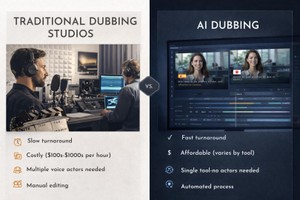
Video translator tools automate the process of converting spoken content into multiple languages without requiring re-recording or hiring voice actors. The technology handles both the translation and the audio, turning a single training video into versions that work across your organization's language needs.
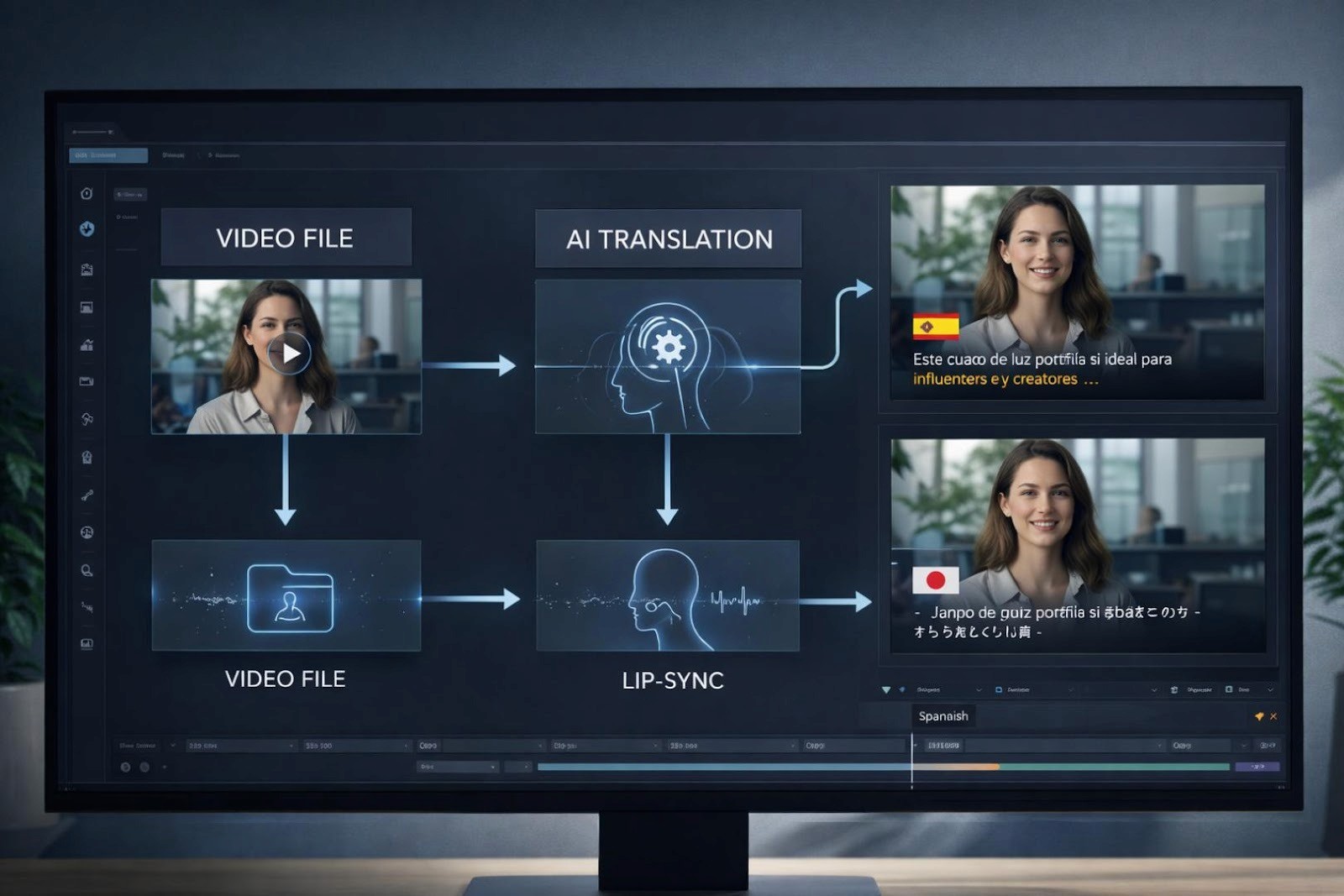
Here's how the process typically works for knowledge management teams:
Upload your existing video — Product demos, training sessions, expert presentations, or process documentation
Select target languages — Choose which teams need access (Spanish for LATAM offices, German for European hubs, Mandarin for Asia-Pacific)
AI processes the content — The tool transcribes speech, translates the script, and generates natural-sounding voiceovers in each language
Review and adjust — Knowledge managers can edit translations to match company terminology or industry-specific language
Distribute to teams — Multilingual versions get added to your learning management system or internal knowledge base
The key advantage? You create once, distribute everywhere. That expert-led workshop your L&D team recorded doesn't need separate filming sessions in five languages.
Video translator technology handles the linguistic work while preserving the original presenter's expertise and teaching style.
Consistency and Reuse
One translated video is useful. A library of consistently translated content becomes a strategic asset. Knowledge management teams need more than one-off translations—they need systems that maintain terminology, tone, and accuracy across hundreds of videos over time.
Why Consistency Matters
When different translators handle your content, the same product feature might be called three different things across three markets. Technical terms get interpreted differently. Brand voice shifts. Employees in regional offices end up confused because training materials contradict each other linguistically.
Video translator tools solve this through:
Terminology management — Save company-specific terms, product names, and technical vocabulary so they translate identically every time
Style consistency — Maintain the same tone across all translated content, whether formal compliance training or casual team updates
Version control — Update the source video once, and the system can refresh all language versions automatically
Scalable workflows — Translate 10 videos or 1,000 using the same quality standards
"The real value isn't just translation—it's building a knowledge system where content created anywhere can be understood everywhere."
The Reuse Advantage
Consider how knowledge flows in your organization. A senior product manager records a feature explanation. With traditional approaches, that video serves one audience. With video translation tools for global teams, the same recording becomes:
Onboarding material for new hires in six languages
Sales enablement content for international teams
Customer education resources for different markets
Partner training for distributors worldwide
You're not creating more content—you're getting more value from what already exists.
Example: Expert-Led Training Libraries
Here's how video translator tools work in practice for building multilingual knowledge systems.
The Scenario
A global manufacturing company has 15 senior engineers who understand complex machinery inside and out. These experts are based in Germany, but the company operates facilities in Mexico, Thailand, Poland, and Brazil. When equipment breaks down or new procedures roll out, local teams either fly experts in (expensive and slow) or wait for translated documentation (often incomplete).
The Solution
The knowledge management team records each expert explaining key processes - troubleshooting guides, maintenance protocols, safety procedures, quality control steps. Instead of keeping these videos in German only, they use video translator technology to create versions in Spanish, Thai, Polish, and Portuguese.
What This Creates:
Content Type | Original Language | Translated Versions | Global Impact |
Equipment troubleshooting | German | 4 languages | All facilities access same expertise |
Safety protocols | German | 4 languages | Consistent compliance training |
Quality procedures | German | 4 languages | Standardized processes globally |
Maintenance workflows | German | 4 languages | Reduced downtime across sites |
Now when a machine issue happens in Thailand, technicians watch the expert explanation in Thai - same knowledge, zero language barrier. The company builds a reusable training library where expertise recorded once serves teams everywhere. New employees in any location get the same high-quality training, and the organization stops losing knowledge when experts retire or move roles.
This is how knowledge sharing through video translation scales without multiplying costs.

Operational Tips
Implementing video translator tools effectively requires more than just uploading videos and pressing translate. Knowledge management teams get better results when they approach multilingual content strategically.
Start With High-Impact Content
Don't try to translate everything at once. Begin with videos that:
Get referenced frequently across teams
Cover critical processes or compliance requirements
Come from subject matter experts who are hard to access
Support onboarding or recurring training needs
Have the longest useful lifespan in your organization
Prioritize content that solves immediate pain points for international teams, then expand your library over time.
Build a Terminology Database Early
Before translating dozens of videos, create a master list of:
Product names and features
Technical terms specific to your industry
Internal processes and department names
Brand voice guidelines for each language
Phrases that should never be translated (proprietary terms, trademarked names)
This upfront work prevents inconsistencies later and saves hours of editing across multiple videos.
Involve Regional Teams in Review
Your Mexico office knows which translations sound natural in Latin American Spanish. Your Poland team can spot terminology that works better locally. Build a review workflow where regional subject matter experts check translations before videos go live—not for perfection, but to catch major misunderstandings or awkward phrasing.
Organize Content for Easy Access
Translated videos are useless if teams can't find them. Structure your knowledge base so employees can:
Filter by language, topic, and content type
Search using terms in their own language
See which videos have multilingual versions available
Access internal training content through familiar platforms
Track Usage and Update Strategically
Monitor which translated videos get watched most in each region. If your Thai team repeatedly accesses certain troubleshooting content, that signals where to invest in more detailed resources. When you update source videos, use AI dubbing tools to refresh all language versions efficiently rather than letting translations become outdated.
Pro tip: Treat your multilingual knowledge library like a living system, not a one-time project. Regular updates keep content relevant and ensure global teams trust the resources you provide.
Ready to Connect Your Global Teams?
Language shouldn't determine who gets access to your organization's best knowledge. Video translator tools turn expert content into shared resources that work across borders, helping knowledge management teams build libraries that actually serve everyone. When training, processes, and expertise flow freely between offices, your organization becomes truly global - not just geographically distributed.
Explore how Perso Dubbing's video translation platform can help your team break down knowledge silos and scale expertise across languages.
Your company's best product trainer just recorded a brilliant 20-minute tutorial. It's perfect - clear, detailed, exactly what new hires need. But here's the problem: your team in Brazil can't use it. Neither can your office in Poland or your partners in Japan.
Knowledge management teams hit this wall constantly: expert content gets created once, in one language, while half the company waits for someone to translate, re-record, or explain it all over again.
Video translator tools change that completely. Instead of leaving valuable training locked away, these tools turn your expert-led videos into multilingual libraries that every team can access and reuse. When language stops being a barrier, knowledge flows freely across borders - and your organization actually becomes global, not just geographically spread out.
Knowledge Silos Across Languages
Large organizations create knowledge every day - product updates, compliance training, technical tutorials, onboarding workflows. But when that knowledge exists in only one language, it creates invisible walls between teams. Your headquarters might have a complete training library, while regional offices struggle with outdated materials or wait months for translations that never arrive.
This isn't just an inconvenience. Language-based knowledge silos lead to real operational problems:
New employees in different regions receive inconsistent training
Expert knowledge stays concentrated in one location instead of spreading company-wide
Teams waste time recreating content that already exists elsewhere
Customer-facing staff can't access the same product information as headquarters
Compliance and safety training doesn't reach all employees equally
When a senior engineer records a critical process walkthrough, that video should benefit every facility globally. Instead, it often sits unused because only English speakers can follow it. Video translator tools break this pattern by making expert content accessible across language barriers—turning isolated knowledge into shared resources that connect global teams rather than divide them.
Translating Internal Knowledge Videos
Video translator tools automate the process of converting spoken content into multiple languages without requiring re-recording or hiring voice actors. The technology handles both the translation and the audio, turning a single training video into versions that work across your organization's language needs.
Here's how the process typically works for knowledge management teams:
Upload your existing video — Product demos, training sessions, expert presentations, or process documentation
Select target languages — Choose which teams need access (Spanish for LATAM offices, German for European hubs, Mandarin for Asia-Pacific)
AI processes the content — The tool transcribes speech, translates the script, and generates natural-sounding voiceovers in each language
Review and adjust — Knowledge managers can edit translations to match company terminology or industry-specific language
Distribute to teams — Multilingual versions get added to your learning management system or internal knowledge base
The key advantage? You create once, distribute everywhere. That expert-led workshop your L&D team recorded doesn't need separate filming sessions in five languages.
Video translator technology handles the linguistic work while preserving the original presenter's expertise and teaching style.
Consistency and Reuse
One translated video is useful. A library of consistently translated content becomes a strategic asset. Knowledge management teams need more than one-off translations—they need systems that maintain terminology, tone, and accuracy across hundreds of videos over time.
Why Consistency Matters
When different translators handle your content, the same product feature might be called three different things across three markets. Technical terms get interpreted differently. Brand voice shifts. Employees in regional offices end up confused because training materials contradict each other linguistically.
Video translator tools solve this through:
Terminology management — Save company-specific terms, product names, and technical vocabulary so they translate identically every time
Style consistency — Maintain the same tone across all translated content, whether formal compliance training or casual team updates
Version control — Update the source video once, and the system can refresh all language versions automatically
Scalable workflows — Translate 10 videos or 1,000 using the same quality standards
"The real value isn't just translation—it's building a knowledge system where content created anywhere can be understood everywhere."
The Reuse Advantage
Consider how knowledge flows in your organization. A senior product manager records a feature explanation. With traditional approaches, that video serves one audience. With video translation tools for global teams, the same recording becomes:
Onboarding material for new hires in six languages
Sales enablement content for international teams
Customer education resources for different markets
Partner training for distributors worldwide
You're not creating more content—you're getting more value from what already exists.
Example: Expert-Led Training Libraries
Here's how video translator tools work in practice for building multilingual knowledge systems.
The Scenario
A global manufacturing company has 15 senior engineers who understand complex machinery inside and out. These experts are based in Germany, but the company operates facilities in Mexico, Thailand, Poland, and Brazil. When equipment breaks down or new procedures roll out, local teams either fly experts in (expensive and slow) or wait for translated documentation (often incomplete).
The Solution
The knowledge management team records each expert explaining key processes - troubleshooting guides, maintenance protocols, safety procedures, quality control steps. Instead of keeping these videos in German only, they use video translator technology to create versions in Spanish, Thai, Polish, and Portuguese.
What This Creates:
Content Type | Original Language | Translated Versions | Global Impact |
Equipment troubleshooting | German | 4 languages | All facilities access same expertise |
Safety protocols | German | 4 languages | Consistent compliance training |
Quality procedures | German | 4 languages | Standardized processes globally |
Maintenance workflows | German | 4 languages | Reduced downtime across sites |
Now when a machine issue happens in Thailand, technicians watch the expert explanation in Thai - same knowledge, zero language barrier. The company builds a reusable training library where expertise recorded once serves teams everywhere. New employees in any location get the same high-quality training, and the organization stops losing knowledge when experts retire or move roles.
This is how knowledge sharing through video translation scales without multiplying costs.
Operational Tips
Implementing video translator tools effectively requires more than just uploading videos and pressing translate. Knowledge management teams get better results when they approach multilingual content strategically.
Start With High-Impact Content
Don't try to translate everything at once. Begin with videos that:
Get referenced frequently across teams
Cover critical processes or compliance requirements
Come from subject matter experts who are hard to access
Support onboarding or recurring training needs
Have the longest useful lifespan in your organization
Prioritize content that solves immediate pain points for international teams, then expand your library over time.
Build a Terminology Database Early
Before translating dozens of videos, create a master list of:
Product names and features
Technical terms specific to your industry
Internal processes and department names
Brand voice guidelines for each language
Phrases that should never be translated (proprietary terms, trademarked names)
This upfront work prevents inconsistencies later and saves hours of editing across multiple videos.
Involve Regional Teams in Review
Your Mexico office knows which translations sound natural in Latin American Spanish. Your Poland team can spot terminology that works better locally. Build a review workflow where regional subject matter experts check translations before videos go live—not for perfection, but to catch major misunderstandings or awkward phrasing.
Organize Content for Easy Access
Translated videos are useless if teams can't find them. Structure your knowledge base so employees can:
Filter by language, topic, and content type
Search using terms in their own language
See which videos have multilingual versions available
Access internal training content through familiar platforms
Track Usage and Update Strategically
Monitor which translated videos get watched most in each region. If your Thai team repeatedly accesses certain troubleshooting content, that signals where to invest in more detailed resources. When you update source videos, use AI dubbing tools to refresh all language versions efficiently rather than letting translations become outdated.
Pro tip: Treat your multilingual knowledge library like a living system, not a one-time project. Regular updates keep content relevant and ensure global teams trust the resources you provide.
Ready to Connect Your Global Teams?
Language shouldn't determine who gets access to your organization's best knowledge. Video translator tools turn expert content into shared resources that work across borders, helping knowledge management teams build libraries that actually serve everyone. When training, processes, and expertise flow freely between offices, your organization becomes truly global - not just geographically distributed.
Explore how Perso Dubbing's video translation platform can help your team break down knowledge silos and scale expertise across languages.
Your company's best product trainer just recorded a brilliant 20-minute tutorial. It's perfect - clear, detailed, exactly what new hires need. But here's the problem: your team in Brazil can't use it. Neither can your office in Poland or your partners in Japan.
Knowledge management teams hit this wall constantly: expert content gets created once, in one language, while half the company waits for someone to translate, re-record, or explain it all over again.
Video translator tools change that completely. Instead of leaving valuable training locked away, these tools turn your expert-led videos into multilingual libraries that every team can access and reuse. When language stops being a barrier, knowledge flows freely across borders - and your organization actually becomes global, not just geographically spread out.
Knowledge Silos Across Languages
Large organizations create knowledge every day - product updates, compliance training, technical tutorials, onboarding workflows. But when that knowledge exists in only one language, it creates invisible walls between teams. Your headquarters might have a complete training library, while regional offices struggle with outdated materials or wait months for translations that never arrive.
This isn't just an inconvenience. Language-based knowledge silos lead to real operational problems:
New employees in different regions receive inconsistent training
Expert knowledge stays concentrated in one location instead of spreading company-wide
Teams waste time recreating content that already exists elsewhere
Customer-facing staff can't access the same product information as headquarters
Compliance and safety training doesn't reach all employees equally
When a senior engineer records a critical process walkthrough, that video should benefit every facility globally. Instead, it often sits unused because only English speakers can follow it. Video translator tools break this pattern by making expert content accessible across language barriers—turning isolated knowledge into shared resources that connect global teams rather than divide them.
Translating Internal Knowledge Videos
Video translator tools automate the process of converting spoken content into multiple languages without requiring re-recording or hiring voice actors. The technology handles both the translation and the audio, turning a single training video into versions that work across your organization's language needs.
Here's how the process typically works for knowledge management teams:
Upload your existing video — Product demos, training sessions, expert presentations, or process documentation
Select target languages — Choose which teams need access (Spanish for LATAM offices, German for European hubs, Mandarin for Asia-Pacific)
AI processes the content — The tool transcribes speech, translates the script, and generates natural-sounding voiceovers in each language
Review and adjust — Knowledge managers can edit translations to match company terminology or industry-specific language
Distribute to teams — Multilingual versions get added to your learning management system or internal knowledge base
The key advantage? You create once, distribute everywhere. That expert-led workshop your L&D team recorded doesn't need separate filming sessions in five languages.
Video translator technology handles the linguistic work while preserving the original presenter's expertise and teaching style.
Consistency and Reuse
One translated video is useful. A library of consistently translated content becomes a strategic asset. Knowledge management teams need more than one-off translations—they need systems that maintain terminology, tone, and accuracy across hundreds of videos over time.
Why Consistency Matters
When different translators handle your content, the same product feature might be called three different things across three markets. Technical terms get interpreted differently. Brand voice shifts. Employees in regional offices end up confused because training materials contradict each other linguistically.
Video translator tools solve this through:
Terminology management — Save company-specific terms, product names, and technical vocabulary so they translate identically every time
Style consistency — Maintain the same tone across all translated content, whether formal compliance training or casual team updates
Version control — Update the source video once, and the system can refresh all language versions automatically
Scalable workflows — Translate 10 videos or 1,000 using the same quality standards
"The real value isn't just translation—it's building a knowledge system where content created anywhere can be understood everywhere."
The Reuse Advantage
Consider how knowledge flows in your organization. A senior product manager records a feature explanation. With traditional approaches, that video serves one audience. With video translation tools for global teams, the same recording becomes:
Onboarding material for new hires in six languages
Sales enablement content for international teams
Customer education resources for different markets
Partner training for distributors worldwide
You're not creating more content—you're getting more value from what already exists.
Example: Expert-Led Training Libraries
Here's how video translator tools work in practice for building multilingual knowledge systems.
The Scenario
A global manufacturing company has 15 senior engineers who understand complex machinery inside and out. These experts are based in Germany, but the company operates facilities in Mexico, Thailand, Poland, and Brazil. When equipment breaks down or new procedures roll out, local teams either fly experts in (expensive and slow) or wait for translated documentation (often incomplete).
The Solution
The knowledge management team records each expert explaining key processes - troubleshooting guides, maintenance protocols, safety procedures, quality control steps. Instead of keeping these videos in German only, they use video translator technology to create versions in Spanish, Thai, Polish, and Portuguese.
What This Creates:
Content Type | Original Language | Translated Versions | Global Impact |
Equipment troubleshooting | German | 4 languages | All facilities access same expertise |
Safety protocols | German | 4 languages | Consistent compliance training |
Quality procedures | German | 4 languages | Standardized processes globally |
Maintenance workflows | German | 4 languages | Reduced downtime across sites |
Now when a machine issue happens in Thailand, technicians watch the expert explanation in Thai - same knowledge, zero language barrier. The company builds a reusable training library where expertise recorded once serves teams everywhere. New employees in any location get the same high-quality training, and the organization stops losing knowledge when experts retire or move roles.
This is how knowledge sharing through video translation scales without multiplying costs.
Operational Tips
Implementing video translator tools effectively requires more than just uploading videos and pressing translate. Knowledge management teams get better results when they approach multilingual content strategically.
Start With High-Impact Content
Don't try to translate everything at once. Begin with videos that:
Get referenced frequently across teams
Cover critical processes or compliance requirements
Come from subject matter experts who are hard to access
Support onboarding or recurring training needs
Have the longest useful lifespan in your organization
Prioritize content that solves immediate pain points for international teams, then expand your library over time.
Build a Terminology Database Early
Before translating dozens of videos, create a master list of:
Product names and features
Technical terms specific to your industry
Internal processes and department names
Brand voice guidelines for each language
Phrases that should never be translated (proprietary terms, trademarked names)
This upfront work prevents inconsistencies later and saves hours of editing across multiple videos.
Involve Regional Teams in Review
Your Mexico office knows which translations sound natural in Latin American Spanish. Your Poland team can spot terminology that works better locally. Build a review workflow where regional subject matter experts check translations before videos go live—not for perfection, but to catch major misunderstandings or awkward phrasing.
Organize Content for Easy Access
Translated videos are useless if teams can't find them. Structure your knowledge base so employees can:
Filter by language, topic, and content type
Search using terms in their own language
See which videos have multilingual versions available
Access internal training content through familiar platforms
Track Usage and Update Strategically
Monitor which translated videos get watched most in each region. If your Thai team repeatedly accesses certain troubleshooting content, that signals where to invest in more detailed resources. When you update source videos, use AI dubbing tools to refresh all language versions efficiently rather than letting translations become outdated.
Pro tip: Treat your multilingual knowledge library like a living system, not a one-time project. Regular updates keep content relevant and ensure global teams trust the resources you provide.
Ready to Connect Your Global Teams?
Language shouldn't determine who gets access to your organization's best knowledge. Video translator tools turn expert content into shared resources that work across borders, helping knowledge management teams build libraries that actually serve everyone. When training, processes, and expertise flow freely between offices, your organization becomes truly global - not just geographically distributed.
Explore how Perso Dubbing's video translation platform can help your team break down knowledge silos and scale expertise across languages.
Continue Reading
Browse All