Enterprise AI Dubbing Compliance: Privacy & Governance
Last Updated




Jump to section
Jump to section

Share
Share
Share
AI Video Translator, Localization, and Dubbing Tool
Try it out for Free
Your team is about to launch a multi-market campaign. The product demo is approved. Legal signed off the claims. Sales wants localized versions in another language for outbound, landing pages, and paid social.
Then someone asks the question that stops the rollout: how will this be governed for enterprise privacy, brand risk, and compliance requirements?
That concern is valid. AI dubbing workflows can involve sensitive enterprise assets such as customer testimonials, employee recordings, internal demos, and unreleased product messaging. For enterprise teams, the real question is not whether dubbing exists, but whether the workflow is governed properly through consent controls, access permissions, retention policies, review gates, and clear handling of voice cloning and translated assets.
This guide is for enterprise marketing, L and D, and product teams who use a Video Translator to scale content responsibly, without creating avoidable privacy and compliance risk.
What Enterprise Teams Must Govern in AI Dubbing Workflows?
For enterprise teams, AI dubbing is manageable when core governance requirements are clearly defined and enforced.
You have the right and consent to use the source audio and video
The platform clearly explains how it stores, secures, and deletes files
Your workflow includes review and access controls, not just generation
If any of those are missing, risk increases quickly. Multi-speaker content, customer testimonials, and employee training videos often carry higher exposure than simple narration.
A practical enterprise approach is to treat each upload as a governed data event: who owns it, who can access it, where it is stored, how long it is retained, and what approval path is required before publishing
Enterprise Privacy and Governance Risks in AI Dubbing and Voice Cloning
Most risk comes from mishandling voice data, not from translation quality.
Consent And Usage Rights
Voice data may be regulated or sensitive depending on jurisdiction, and voice cloning raises governance requirements further because identity and consent boundaries become more important. Teams should confirm:
you have written permission for the recording and reuse
speaker consent covers localization into another language
the platform does not reuse your audio for unrelated model training without clear permission
Data Retention and Deletion
Ask what happens after export:
Are raw uploads retained, and for how long
Can admins delete projects and associated files
Do backups also get deleted within a defined period
Access Control and Account Security
Even a technically secure platform creates enterprise risk if internal access is too broad. For sensitive assets:
Restrict project access by role
Use strong authentication for team accounts
log who uploaded, edited, exported, and shared
To ground this in how Perso Dubbing describes handling voice data, you can reference how voice cloning is positioned around consent and secure handling. The key is not the marketing claim, but whether the platform’s policies and controls match your internal requirements.
Compliance Checklist for Automatic Dubbing workflows
Automatic Dubbing speeds production, but compliance still needs structure. Use the checklist below before you scale to dozens of videos.
Compliance area | What to verify | What to store internally |
Consent | speaker permission for dubbing and reuse | signed consent forms, release terms |
Rights | you own the video, script, music, and footage | license records, asset list |
Data handling | retention window and deletion process | vendor documentation, internal policy |
Access control | who can upload, edit, export | role matrix, audit trail |
Review | approval steps before publishing | review checklist, approver names |
Misuse protection | internal policy against impersonation | training notes, policy acknowledgment |
This table is a simple way to help legal and marketing align on what “safe” means for your organization.
How To Run a Safe Dubbing Workflow with A Video Translator?
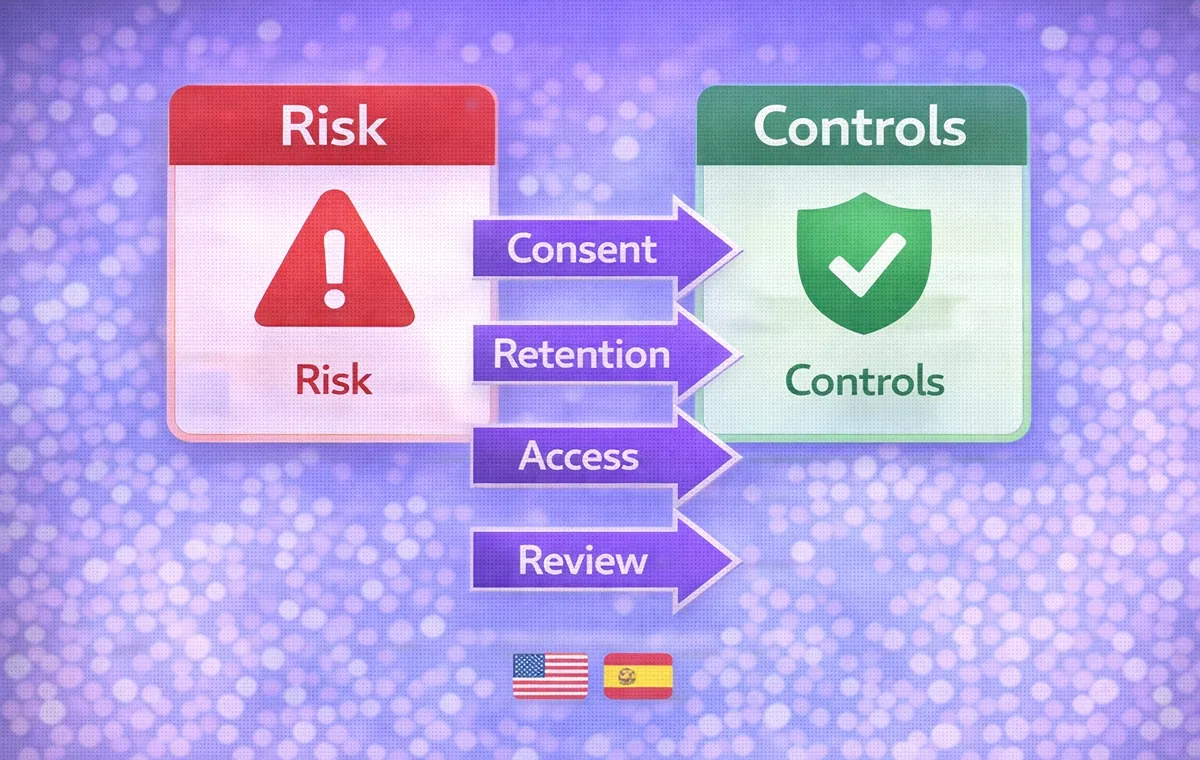
A safe workflow is repeatable. Teams usually get into trouble when each project is handled differently.
Step 1: Classify The Video Type
Not all content carries the same sensitivity.
Higher risk examples:
customer testimonials
employee communications
internal product roadmaps
healthcare, finance, or regulated topics
Lower risk examples:
generic product animations
public event highlights
narration over stock visuals
Step 2: Separate Source Files from Final Exports
Treat raw source uploads as sensitive. Final exports may be less sensitive, but still need controls before public release.
Step 3: Build An Approval Step into The Process
For marketing teams, the safest model is:
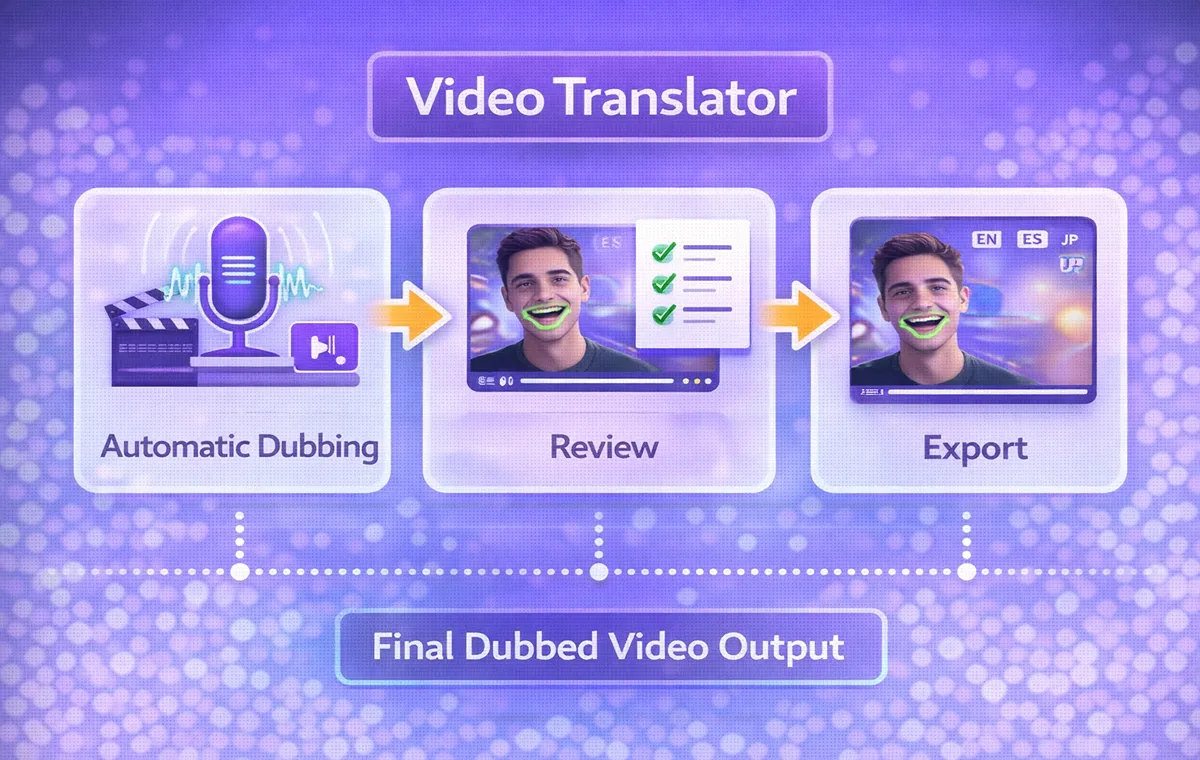
generate a first draft dub
refine script and terminology
review for claims, tone, and cultural fit
export and publish
This is also where Perso Dubbing can fit naturally for marketing teams because the workflow is designed around iteration and export outputs, not just one-click generation. For example, the marketing use case page describes scaling video ad localization as a repeatable process, which matches how campaign teams actually work.
What To Check in Platform Security Documentation?
You do not need to become a security engineer, but you should ask for specific answers. A safe vendor can usually respond clearly.
Look for:
encryption in transit and at rest
access controls and admin permissions
retention and deletion policies
incident response and support channels
clarity on whether customer data is used for model training
Avoid vague language like “we respect privacy” with no details. Teams should be able to map vendor controls to their internal policy.
If your team is just starting, a strong baseline is to standardize one approved workflow (platform + naming + permissions + review path + retention handling) so governance stays consistent across campaigns and departments.
Measuring Performance Lift Without Risky Promises
Teams often ask for ROI, but “safe” measurement avoids guaranteed outcomes. A better approach is to run controlled tests and track lift signals.
Here are practical ways teams measure performance impact of AI Dubbing and Video Translation:
watch time and retention on localized versions vs original
completion rate for training or onboarding videos by language
click-through rate from localized video ads by region
CPA or conversion rate comparisons using regional A and B tests
qualitative feedback from local teams on tone and clarity
The key is to measure outcomes tied to distribution channels, not to assume Dubbing automatically improves sales. Run small pilots, then scale what works.
Legal And Brand Safety Notes Teams Often Miss
Legal and brand safety issues rarely appear during the first draft of a localized video. They usually surface after distribution, when messaging, tone, or consent boundaries are tested in real markets.
Claims And Regulated Messaging
If the English version is compliant, the translation still needs review. Some terms can become stronger or weaker in another language.
Impersonation And Deceptive Use
Even with consent, teams should prohibit using Voice Cloning to make a person say something they did not approve. This is a policy issue as much as a tooling issue.
Recordkeeping
Keep a simple internal record for each localized asset:
source video link
target language
approver
date published
proof of consent where needed
These records reduce friction if concerns appear later.
Frequently Asked Questions
Is dubbing ai safe for customer testimonial videos?
It can be safe if consent covers reuse and localization, and if your workflow restricts access and requires approval before publishing.
Does Automatic Dubbing create extra compliance risk?
Automatic Dubbing is not inherently riskier, but it can increase risk if teams skip review steps because it feels fast.
Do we need a legal review for every localized video?
Not always. Many teams use a tiered approach, with legal review for high-risk categories and structured marketing review for lower-risk content.
How should teams handle Voice Cloning ethically?
Get explicit consent, document it, limit access, and avoid creating content that changes meaning or intent from what the speaker approved.
Conclusion
For enterprise teams, AI dubbing can be governed responsibly when consent, retention, access control, approvals, and review steps are treated as required workflow controls, not optional extras.\. If your team uses a Video Translator for multilingual rollout, start with a clear checklist, run a pilot, and standardize how assets are generated and approved. That combination supports privacy, compliance, and brand trust while still letting teams move quickly across markets.
Your team is about to launch a multi-market campaign. The product demo is approved. Legal signed off the claims. Sales wants localized versions in another language for outbound, landing pages, and paid social.
Then someone asks the question that stops the rollout: how will this be governed for enterprise privacy, brand risk, and compliance requirements?
That concern is valid. AI dubbing workflows can involve sensitive enterprise assets such as customer testimonials, employee recordings, internal demos, and unreleased product messaging. For enterprise teams, the real question is not whether dubbing exists, but whether the workflow is governed properly through consent controls, access permissions, retention policies, review gates, and clear handling of voice cloning and translated assets.
This guide is for enterprise marketing, L and D, and product teams who use a Video Translator to scale content responsibly, without creating avoidable privacy and compliance risk.
What Enterprise Teams Must Govern in AI Dubbing Workflows?
For enterprise teams, AI dubbing is manageable when core governance requirements are clearly defined and enforced.
You have the right and consent to use the source audio and video
The platform clearly explains how it stores, secures, and deletes files
Your workflow includes review and access controls, not just generation
If any of those are missing, risk increases quickly. Multi-speaker content, customer testimonials, and employee training videos often carry higher exposure than simple narration.
A practical enterprise approach is to treat each upload as a governed data event: who owns it, who can access it, where it is stored, how long it is retained, and what approval path is required before publishing
Enterprise Privacy and Governance Risks in AI Dubbing and Voice Cloning
Most risk comes from mishandling voice data, not from translation quality.
Consent And Usage Rights
Voice data may be regulated or sensitive depending on jurisdiction, and voice cloning raises governance requirements further because identity and consent boundaries become more important. Teams should confirm:
you have written permission for the recording and reuse
speaker consent covers localization into another language
the platform does not reuse your audio for unrelated model training without clear permission
Data Retention and Deletion
Ask what happens after export:
Are raw uploads retained, and for how long
Can admins delete projects and associated files
Do backups also get deleted within a defined period
Access Control and Account Security
Even a technically secure platform creates enterprise risk if internal access is too broad. For sensitive assets:
Restrict project access by role
Use strong authentication for team accounts
log who uploaded, edited, exported, and shared
To ground this in how Perso Dubbing describes handling voice data, you can reference how voice cloning is positioned around consent and secure handling. The key is not the marketing claim, but whether the platform’s policies and controls match your internal requirements.
Compliance Checklist for Automatic Dubbing workflows
Automatic Dubbing speeds production, but compliance still needs structure. Use the checklist below before you scale to dozens of videos.
Compliance area | What to verify | What to store internally |
Consent | speaker permission for dubbing and reuse | signed consent forms, release terms |
Rights | you own the video, script, music, and footage | license records, asset list |
Data handling | retention window and deletion process | vendor documentation, internal policy |
Access control | who can upload, edit, export | role matrix, audit trail |
Review | approval steps before publishing | review checklist, approver names |
Misuse protection | internal policy against impersonation | training notes, policy acknowledgment |
This table is a simple way to help legal and marketing align on what “safe” means for your organization.
How To Run a Safe Dubbing Workflow with A Video Translator?
A safe workflow is repeatable. Teams usually get into trouble when each project is handled differently.
Step 1: Classify The Video Type
Not all content carries the same sensitivity.
Higher risk examples:
customer testimonials
employee communications
internal product roadmaps
healthcare, finance, or regulated topics
Lower risk examples:
generic product animations
public event highlights
narration over stock visuals
Step 2: Separate Source Files from Final Exports
Treat raw source uploads as sensitive. Final exports may be less sensitive, but still need controls before public release.
Step 3: Build An Approval Step into The Process
For marketing teams, the safest model is:
generate a first draft dub
refine script and terminology
review for claims, tone, and cultural fit
export and publish
This is also where Perso Dubbing can fit naturally for marketing teams because the workflow is designed around iteration and export outputs, not just one-click generation. For example, the marketing use case page describes scaling video ad localization as a repeatable process, which matches how campaign teams actually work.
What To Check in Platform Security Documentation?
You do not need to become a security engineer, but you should ask for specific answers. A safe vendor can usually respond clearly.
Look for:
encryption in transit and at rest
access controls and admin permissions
retention and deletion policies
incident response and support channels
clarity on whether customer data is used for model training
Avoid vague language like “we respect privacy” with no details. Teams should be able to map vendor controls to their internal policy.
If your team is just starting, a strong baseline is to standardize one approved workflow (platform + naming + permissions + review path + retention handling) so governance stays consistent across campaigns and departments.
Measuring Performance Lift Without Risky Promises
Teams often ask for ROI, but “safe” measurement avoids guaranteed outcomes. A better approach is to run controlled tests and track lift signals.
Here are practical ways teams measure performance impact of AI Dubbing and Video Translation:
watch time and retention on localized versions vs original
completion rate for training or onboarding videos by language
click-through rate from localized video ads by region
CPA or conversion rate comparisons using regional A and B tests
qualitative feedback from local teams on tone and clarity
The key is to measure outcomes tied to distribution channels, not to assume Dubbing automatically improves sales. Run small pilots, then scale what works.
Legal And Brand Safety Notes Teams Often Miss
Legal and brand safety issues rarely appear during the first draft of a localized video. They usually surface after distribution, when messaging, tone, or consent boundaries are tested in real markets.
Claims And Regulated Messaging
If the English version is compliant, the translation still needs review. Some terms can become stronger or weaker in another language.
Impersonation And Deceptive Use
Even with consent, teams should prohibit using Voice Cloning to make a person say something they did not approve. This is a policy issue as much as a tooling issue.
Recordkeeping
Keep a simple internal record for each localized asset:
source video link
target language
approver
date published
proof of consent where needed
These records reduce friction if concerns appear later.
Frequently Asked Questions
Is dubbing ai safe for customer testimonial videos?
It can be safe if consent covers reuse and localization, and if your workflow restricts access and requires approval before publishing.
Does Automatic Dubbing create extra compliance risk?
Automatic Dubbing is not inherently riskier, but it can increase risk if teams skip review steps because it feels fast.
Do we need a legal review for every localized video?
Not always. Many teams use a tiered approach, with legal review for high-risk categories and structured marketing review for lower-risk content.
How should teams handle Voice Cloning ethically?
Get explicit consent, document it, limit access, and avoid creating content that changes meaning or intent from what the speaker approved.
Conclusion
For enterprise teams, AI dubbing can be governed responsibly when consent, retention, access control, approvals, and review steps are treated as required workflow controls, not optional extras.\. If your team uses a Video Translator for multilingual rollout, start with a clear checklist, run a pilot, and standardize how assets are generated and approved. That combination supports privacy, compliance, and brand trust while still letting teams move quickly across markets.
Your team is about to launch a multi-market campaign. The product demo is approved. Legal signed off the claims. Sales wants localized versions in another language for outbound, landing pages, and paid social.
Then someone asks the question that stops the rollout: how will this be governed for enterprise privacy, brand risk, and compliance requirements?
That concern is valid. AI dubbing workflows can involve sensitive enterprise assets such as customer testimonials, employee recordings, internal demos, and unreleased product messaging. For enterprise teams, the real question is not whether dubbing exists, but whether the workflow is governed properly through consent controls, access permissions, retention policies, review gates, and clear handling of voice cloning and translated assets.
This guide is for enterprise marketing, L and D, and product teams who use a Video Translator to scale content responsibly, without creating avoidable privacy and compliance risk.
What Enterprise Teams Must Govern in AI Dubbing Workflows?
For enterprise teams, AI dubbing is manageable when core governance requirements are clearly defined and enforced.
You have the right and consent to use the source audio and video
The platform clearly explains how it stores, secures, and deletes files
Your workflow includes review and access controls, not just generation
If any of those are missing, risk increases quickly. Multi-speaker content, customer testimonials, and employee training videos often carry higher exposure than simple narration.
A practical enterprise approach is to treat each upload as a governed data event: who owns it, who can access it, where it is stored, how long it is retained, and what approval path is required before publishing
Enterprise Privacy and Governance Risks in AI Dubbing and Voice Cloning
Most risk comes from mishandling voice data, not from translation quality.
Consent And Usage Rights
Voice data may be regulated or sensitive depending on jurisdiction, and voice cloning raises governance requirements further because identity and consent boundaries become more important. Teams should confirm:
you have written permission for the recording and reuse
speaker consent covers localization into another language
the platform does not reuse your audio for unrelated model training without clear permission
Data Retention and Deletion
Ask what happens after export:
Are raw uploads retained, and for how long
Can admins delete projects and associated files
Do backups also get deleted within a defined period
Access Control and Account Security
Even a technically secure platform creates enterprise risk if internal access is too broad. For sensitive assets:
Restrict project access by role
Use strong authentication for team accounts
log who uploaded, edited, exported, and shared
To ground this in how Perso Dubbing describes handling voice data, you can reference how voice cloning is positioned around consent and secure handling. The key is not the marketing claim, but whether the platform’s policies and controls match your internal requirements.
Compliance Checklist for Automatic Dubbing workflows
Automatic Dubbing speeds production, but compliance still needs structure. Use the checklist below before you scale to dozens of videos.
Compliance area | What to verify | What to store internally |
Consent | speaker permission for dubbing and reuse | signed consent forms, release terms |
Rights | you own the video, script, music, and footage | license records, asset list |
Data handling | retention window and deletion process | vendor documentation, internal policy |
Access control | who can upload, edit, export | role matrix, audit trail |
Review | approval steps before publishing | review checklist, approver names |
Misuse protection | internal policy against impersonation | training notes, policy acknowledgment |
This table is a simple way to help legal and marketing align on what “safe” means for your organization.
How To Run a Safe Dubbing Workflow with A Video Translator?
A safe workflow is repeatable. Teams usually get into trouble when each project is handled differently.
Step 1: Classify The Video Type
Not all content carries the same sensitivity.
Higher risk examples:
customer testimonials
employee communications
internal product roadmaps
healthcare, finance, or regulated topics
Lower risk examples:
generic product animations
public event highlights
narration over stock visuals
Step 2: Separate Source Files from Final Exports
Treat raw source uploads as sensitive. Final exports may be less sensitive, but still need controls before public release.
Step 3: Build An Approval Step into The Process
For marketing teams, the safest model is:
generate a first draft dub
refine script and terminology
review for claims, tone, and cultural fit
export and publish
This is also where Perso Dubbing can fit naturally for marketing teams because the workflow is designed around iteration and export outputs, not just one-click generation. For example, the marketing use case page describes scaling video ad localization as a repeatable process, which matches how campaign teams actually work.
What To Check in Platform Security Documentation?
You do not need to become a security engineer, but you should ask for specific answers. A safe vendor can usually respond clearly.
Look for:
encryption in transit and at rest
access controls and admin permissions
retention and deletion policies
incident response and support channels
clarity on whether customer data is used for model training
Avoid vague language like “we respect privacy” with no details. Teams should be able to map vendor controls to their internal policy.
If your team is just starting, a strong baseline is to standardize one approved workflow (platform + naming + permissions + review path + retention handling) so governance stays consistent across campaigns and departments.
Measuring Performance Lift Without Risky Promises
Teams often ask for ROI, but “safe” measurement avoids guaranteed outcomes. A better approach is to run controlled tests and track lift signals.
Here are practical ways teams measure performance impact of AI Dubbing and Video Translation:
watch time and retention on localized versions vs original
completion rate for training or onboarding videos by language
click-through rate from localized video ads by region
CPA or conversion rate comparisons using regional A and B tests
qualitative feedback from local teams on tone and clarity
The key is to measure outcomes tied to distribution channels, not to assume Dubbing automatically improves sales. Run small pilots, then scale what works.
Legal And Brand Safety Notes Teams Often Miss
Legal and brand safety issues rarely appear during the first draft of a localized video. They usually surface after distribution, when messaging, tone, or consent boundaries are tested in real markets.
Claims And Regulated Messaging
If the English version is compliant, the translation still needs review. Some terms can become stronger or weaker in another language.
Impersonation And Deceptive Use
Even with consent, teams should prohibit using Voice Cloning to make a person say something they did not approve. This is a policy issue as much as a tooling issue.
Recordkeeping
Keep a simple internal record for each localized asset:
source video link
target language
approver
date published
proof of consent where needed
These records reduce friction if concerns appear later.
Frequently Asked Questions
Is dubbing ai safe for customer testimonial videos?
It can be safe if consent covers reuse and localization, and if your workflow restricts access and requires approval before publishing.
Does Automatic Dubbing create extra compliance risk?
Automatic Dubbing is not inherently riskier, but it can increase risk if teams skip review steps because it feels fast.
Do we need a legal review for every localized video?
Not always. Many teams use a tiered approach, with legal review for high-risk categories and structured marketing review for lower-risk content.
How should teams handle Voice Cloning ethically?
Get explicit consent, document it, limit access, and avoid creating content that changes meaning or intent from what the speaker approved.
Conclusion
For enterprise teams, AI dubbing can be governed responsibly when consent, retention, access control, approvals, and review steps are treated as required workflow controls, not optional extras.\. If your team uses a Video Translator for multilingual rollout, start with a clear checklist, run a pilot, and standardize how assets are generated and approved. That combination supports privacy, compliance, and brand trust while still letting teams move quickly across markets.
Continue Reading
Browse All