Translate TikTok Videos in 3 Minutes with AI — No App
Last Updated




Jump to section
Jump to section

Share
Share
Share
AI Video Translator, Localization, and Dubbing Tool
Try it out for Free
Your latest TikTok hits 15K views. Dozens of comments ask for Spanish, Portuguese, and French translations.
Analytics show thirty percent of views came from non-English countries. That's thousands of unconverted followers who want your content but can't fully engage with it in English.
Eighty percent of TikTok's billion users don't speak English first. That's 800 million people scrolling past your content because of language barriers. Every untranslated video represents missed opportunities for growth, engagement, and revenue.
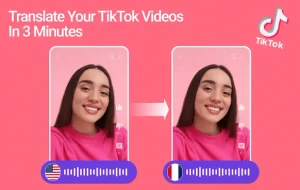
The solution: AI dubbing technology that translates videos in three minutes while preserving your voice, syncing lip movements, and capturing emotion. Modern AI dubbing makes professional multilingual content accessible to every creator, regardless of budget or technical expertise. Here's how.
The Algorithm Rewards Native Language Content
TikTok prioritizes content matching user language preferences. The algorithm serves content in a user's native language first, meaning your English videos compete against all English content globally. Translated content sees three to five times higher engagement in target markets. That's the difference between 200 views and 1,000 views on identical videos.
Only twelve percent of creators post multilingual content. This creates a massive opportunity. Less competition means your translated videos face fewer rivals for attention, leading to faster growth and higher visibility in international markets.
Creator Sarah Martinez translated fitness videos into Spanish after noticing strong Latin American engagement. Four months later, followers jumped from 95K to 280K. Her Spanish videos consistently outperform English versions by forty percent, proving that language-specific content drives measurable results.
The algorithm doesn't just favor translated content, it actively promotes it to underserved audiences hungry for quality content in their native language.
AI TikTok Video Translation Methods Compared
Not all translation methods deliver equal results. Understanding the differences helps you choose the right approach for your content strategy.
Subtitles Only
TikTok's built-in captions are free and easy to add. However, sixty percent of users don't read subtitles while scrolling. Subtitles fail to capture tone, emotion, or vocal nuance. They're better than nothing but represent a missed opportunity for deeper engagement.
Subtitles work best for supplementary accessibility rather than primary translation strategy.
Generic Voice-Over
Basic text-to-speech tools sound robotic and lack emotional range. The bigger problem: lip-sync mismatch between English mouth movements and Spanish audio creates a jarring viewing experience. Viewers instinctively recognize the disconnect and scroll away.
Generic voice-overs strip away your unique voice and personality, the exact elements that built your audience in the first place.
AI Dubbing with Lip-Sync
Advanced AI lip sync technology analyzes video frame by frame, clones your voice with all its unique characteristics, translates your script with cultural context, and adjusts lip movements to match the new language perfectly. The result looks and sounds like you recorded in Spanish from the start.
Processing takes three minutes for 60-second videos. This speed lets you translate trending content while it's still relevant, maximizing algorithmic visibility.
Which Translation Method Should You Choose
Different creator types need different solutions. Here's how to decide.
Choose subtitles if: You're testing international markets with minimal investment and don't need high engagement rates. Subtitles work for initial market research to identify which languages your audience speaks.
Choose generic voice-over if: You create faceless content like animations, screen recordings, or B-roll compilations where lip-sync doesn't matter. Your face never appears, so audio mismatches won't distract viewers.
Choose AI dubbing with lip-sync if: You appear on camera, want professional results that maintain your brand voice, or need to scale multilingual content quickly. This method delivers the highest engagement and feels most authentic to viewers.
Most successful multilingual creators use AI dubbing because it preserves brand voice across languages and eliminates the "dubbed" feeling that makes viewers scroll away. The investment pays off through higher engagement, faster follower growth, and expanded monetization opportunities.
How AI Translation Actually Works
The technical process is simpler than most creators expect. Here's the exact workflow.
Step One: Upload Your Video
Download your TikTok by tapping the three dots on your video and selecting "Save Video." Upload the file to your auto dubbing platform. Some advanced tools let you paste the TikTok URL directly, eliminating the download step entirely.
One important consideration: if your video uses copyrighted music, download the video without audio first. You'll add localized trending sounds from your target market later. This strategy improves local algorithm visibility because TikTok's algorithm favors region-specific trending audio.
Step Two: Pick Your Languages
Check TikTok analytics under "Top Territories" to see where your international views come from. This data reveals which languages offer the highest return on translation effort. Start with two or three languages maximum to maintain quality.
Spanish (475M speakers) dominates Latin America and represents the second-largest language on TikTok. Portuguese (234M speakers) unlocks Brazil's explosive creator economy. French (280M speakers) covers underserved European and African markets with strong purchasing power.
Quality beats quantity in language selection. Master one language completely before expanding to others. Building genuine cultural connection in one market outperforms superficial presence in five.
Step Three: Set Up Voice Cloning
Voice cloning technology captures your unique tone, cadence, and emotional range from a 30-second audio sample. The platform analyzes your voice characteristics and creates a profile that works across all languages.
Every subsequent video uses that voice profile, preserving your brand identity across languages. Viewers in Spain hear the same personality and energy as viewers in Mexico, just in their native language.
Step Four: Review the Translation
AI converts your speech to the target language automatically, but cultural adaptation requires human review. Spend 60 seconds checking slang and cultural references.
For example, "That's fire" translates literally to "eso es fuego" in Spanish, but native speakers say "eso está increíble" or "eso está brutal." These small adjustments dramatically improve authenticity and viewer trust.
Check numbers, dates, and cultural references. Thanksgiving jokes resonate in the United States but mean nothing in Argentina. Replace region-specific references with universal moments your international audience understands.
Step Five: Download and Schedule
Processing typically takes two minutes for 60-second videos. Once complete, download your translated video and add localized hashtags before posting.
Schedule posts for target market peak hours when your audience is most active. Mexico: 12-2pm and 7-9pm CST. Spain: 1-3pm and 8-10pm CET. Brazil: 11am-1pm and 6-8pm BRT.
Timing matters because TikTok's algorithm tests new content with small audience groups first. If they're asleep, your video gets deprioritized before reaching its full potential audience.
Five Common Mistakes
Avoid these errors that sabotage otherwise well-translated content.
1. Using English Hashtags
Spanish users search #ParaTi, not #ForYou. Portuguese users search #PraVocê. Each language community has its own trending hashtags and discovery patterns.
Research localized hashtags for each market. Spend ten minutes exploring content in your target language to identify trending tags relevant to your niche.
2. Posting at Wrong Times
The algorithm tests content with small groups first. If your target audience is asleep, engagement rates plummet and the algorithm deprioritizes your video permanently.
Schedule posts for target market peak hours, not your local timezone. This single change can double initial engagement rates.
3. Ignoring Cultural Context
Thanksgiving jokes fail in Argentina. Super Bowl references confuse European audiences. American measurement units (Fahrenheit, miles) require conversion for international viewers.
Replace U.S.-specific references with universal moments everyone experiences. Video localization requires cultural adaptation, not just linguistic translation.
4. One Spanish for All
Spanish isn't monolithic. "Carro" in Mexico becomes "coche" in Spain and "auto" in Argentina. These regional variants signal whether you understand your audience.
Choose regional variants strategically: Mexican Spanish for North American audiences, Castilian Spanish for Spain, Neutral Spanish for broad South American reach. The wrong variant feels inauthentic and damages credibility.
5. English On-Screen Text
Perfect dubbing with English captions screams "lazy translation" to viewers. Translate all visible text, including graphics, captions, and any words appearing in the video frame.
Consistency across audio and visual elements creates seamless viewing experiences that build trust and encourage shares.
Why Advanced AI Works
Technology quality determines whether translated content succeeds or fails. Here's what separates basic tools from professional solutions.
Voice cloning preserves your unique vocal characteristics, tone, pitch, rhythm, and emotional range. Your Spanish audience hears the same personality that attracted your English followers. Generic text-to-speech destroys brand recognition by replacing your voice with robotic monotone.
Frame-perfect lip-sync eliminates jarring audio-visual mismatches. Even half-second delays between mouth movements and spoken words trigger viewer discomfort. The human brain instantly detects synchronization errors and interprets them as low quality.
Three-minute processing times let you ride trends before they die. TikTok trends typically peak within 48-72 hours. Traditional dubbing takes days, meaning your translated content arrives after trends fade. AI speed preserves your competitive advantage.
Monetization Opportunities for Translated Content
Translated content unlocks revenue streams unavailable to English-only creators.
Brand deals in Latin America and Europe often pay twenty to forty percent more for niche creators compared to saturated U.S. markets. A skincare brand might pay more for a Spanish post than an English one because fewer creators serve that audience well. Brands pay premium rates for authentic access to underserved markets.
TikTok's Creator Fund pays based on authentic views. When your Spanish video gets five times the engagement of your English version, that directly impacts earnings. More watch time equals more shares equals more money. The fund rewards content that keeps users on the platform longer, and language-matched content does exactly that.
Affiliate marketing works better too. Product recommendations in a viewer's native language convert at significantly higher rates. Your Amazon affiliate links for Spanish-speaking audiences can outperform English links by thirty to fifty percent on identical products. Native language creates trust, and trust drives purchases.
Real Results
@FitnessWithAna translated workout videos after noticing twenty percent of her views came from Latin American audiences.
Before translation: 120K followers, 8% engagement rate, $1,200 monthly revenue.
After six months of consistent translation: 380K followers, 14% engagement rate, $4,800 monthly revenue.
Her Spanish videos consistently outperform English versions by forty percent. The data proves that language accessibility directly impacts every meaningful metric, followers, engagement, and income.
Your Action Plan to Start Today
Don't overthink the process. Start small and scale based on results.
Pick one high-performing English video from the past month. Choose content that already proved successful with your existing audience. Translate it to Spanish using AI dubbing. Add appropriate Spanish hashtags like #ParaTi and #Español. Schedule for 8pm Mexico City time to maximize initial engagement.
Check analytics in 48 hours. Most creators see immediate engagement improvements in target markets. Compare views, watch time, shares, and comments between English and translated versions.
If results exceed expectations, commit to translating one or two videos weekly. Consistent translation over six months can double or triple your follower count. The 800 million non-English TikTok users are scrolling now, looking for content in their native language.
Frequently Asked Questions
1. Can I translate TikTok videos for free?
TikTok's auto-captions are free but only add subtitles without voice translation. Free AI dubbing tools typically limit you to one or two videos monthly with watermarks that look unprofessional. Most platforms offer free trials to test quality before committing to regular use.
2. How does AI video translation compare to traditional methods?
Traditional human dubbing takes two to five days per video and requires coordinating with voice actors across different time zones. Professional AI video translation tools complete the same work in minutes with consistent voice quality across all your content. AI also scales effortlessly, translating ten videos takes the same per-video time as translating one.
3. Does translated content actually perform better?
Yes, consistently. Translated TikToks get three to five times higher engagement in target markets compared to English content shown to the same audiences. Creators report forty to 200 percent follower growth within six months of implementing regular translation schedules.
4. What about videos with multiple people?
Advanced platforms auto-detect up to ten different speakers in a single video and dub each voice separately with appropriate voice characteristics. This works perfectly for duets, stitches, interviews, and collaboration content. Each person maintains their distinct voice across languages.
5. Which languages should I start with?
Check TikTok analytics for "Top Territories" to see where your current international views originate. Spanish, Portuguese, and French show highest engagement rates for English creators. Start with whichever language represents your largest international audience segment.
6. How long does translation take?
Advanced tools process 60-second videos in approximately three minutes from upload to final download. Traditional human dubbing takes two to five days. AI speed advantage lets you capitalize on trending topics while they're still relevant to algorithms and audiences.
7. Will TikTok flag translated videos as spam?
No. TikTok actively encourages multilingual content creation as part of their global platform strategy. Post translations as new individual videos rather than reposts of the same content. This approach avoids duplicate content flags while maximizing reach across different language communities.
Your latest TikTok hits 15K views. Dozens of comments ask for Spanish, Portuguese, and French translations.
Analytics show thirty percent of views came from non-English countries. That's thousands of unconverted followers who want your content but can't fully engage with it in English.
Eighty percent of TikTok's billion users don't speak English first. That's 800 million people scrolling past your content because of language barriers. Every untranslated video represents missed opportunities for growth, engagement, and revenue.
The solution: AI dubbing technology that translates videos in three minutes while preserving your voice, syncing lip movements, and capturing emotion. Modern AI dubbing makes professional multilingual content accessible to every creator, regardless of budget or technical expertise. Here's how.
The Algorithm Rewards Native Language Content
TikTok prioritizes content matching user language preferences. The algorithm serves content in a user's native language first, meaning your English videos compete against all English content globally. Translated content sees three to five times higher engagement in target markets. That's the difference between 200 views and 1,000 views on identical videos.
Only twelve percent of creators post multilingual content. This creates a massive opportunity. Less competition means your translated videos face fewer rivals for attention, leading to faster growth and higher visibility in international markets.
Creator Sarah Martinez translated fitness videos into Spanish after noticing strong Latin American engagement. Four months later, followers jumped from 95K to 280K. Her Spanish videos consistently outperform English versions by forty percent, proving that language-specific content drives measurable results.
The algorithm doesn't just favor translated content, it actively promotes it to underserved audiences hungry for quality content in their native language.
AI TikTok Video Translation Methods Compared
Not all translation methods deliver equal results. Understanding the differences helps you choose the right approach for your content strategy.
Subtitles Only
TikTok's built-in captions are free and easy to add. However, sixty percent of users don't read subtitles while scrolling. Subtitles fail to capture tone, emotion, or vocal nuance. They're better than nothing but represent a missed opportunity for deeper engagement.
Subtitles work best for supplementary accessibility rather than primary translation strategy.
Generic Voice-Over
Basic text-to-speech tools sound robotic and lack emotional range. The bigger problem: lip-sync mismatch between English mouth movements and Spanish audio creates a jarring viewing experience. Viewers instinctively recognize the disconnect and scroll away.
Generic voice-overs strip away your unique voice and personality, the exact elements that built your audience in the first place.
AI Dubbing with Lip-Sync
Advanced AI lip sync technology analyzes video frame by frame, clones your voice with all its unique characteristics, translates your script with cultural context, and adjusts lip movements to match the new language perfectly. The result looks and sounds like you recorded in Spanish from the start.
Processing takes three minutes for 60-second videos. This speed lets you translate trending content while it's still relevant, maximizing algorithmic visibility.
Which Translation Method Should You Choose
Different creator types need different solutions. Here's how to decide.
Choose subtitles if: You're testing international markets with minimal investment and don't need high engagement rates. Subtitles work for initial market research to identify which languages your audience speaks.
Choose generic voice-over if: You create faceless content like animations, screen recordings, or B-roll compilations where lip-sync doesn't matter. Your face never appears, so audio mismatches won't distract viewers.
Choose AI dubbing with lip-sync if: You appear on camera, want professional results that maintain your brand voice, or need to scale multilingual content quickly. This method delivers the highest engagement and feels most authentic to viewers.
Most successful multilingual creators use AI dubbing because it preserves brand voice across languages and eliminates the "dubbed" feeling that makes viewers scroll away. The investment pays off through higher engagement, faster follower growth, and expanded monetization opportunities.
How AI Translation Actually Works
The technical process is simpler than most creators expect. Here's the exact workflow.
Step One: Upload Your Video
Download your TikTok by tapping the three dots on your video and selecting "Save Video." Upload the file to your auto dubbing platform. Some advanced tools let you paste the TikTok URL directly, eliminating the download step entirely.
One important consideration: if your video uses copyrighted music, download the video without audio first. You'll add localized trending sounds from your target market later. This strategy improves local algorithm visibility because TikTok's algorithm favors region-specific trending audio.
Step Two: Pick Your Languages
Check TikTok analytics under "Top Territories" to see where your international views come from. This data reveals which languages offer the highest return on translation effort. Start with two or three languages maximum to maintain quality.
Spanish (475M speakers) dominates Latin America and represents the second-largest language on TikTok. Portuguese (234M speakers) unlocks Brazil's explosive creator economy. French (280M speakers) covers underserved European and African markets with strong purchasing power.
Quality beats quantity in language selection. Master one language completely before expanding to others. Building genuine cultural connection in one market outperforms superficial presence in five.
Step Three: Set Up Voice Cloning
Voice cloning technology captures your unique tone, cadence, and emotional range from a 30-second audio sample. The platform analyzes your voice characteristics and creates a profile that works across all languages.
Every subsequent video uses that voice profile, preserving your brand identity across languages. Viewers in Spain hear the same personality and energy as viewers in Mexico, just in their native language.
Step Four: Review the Translation
AI converts your speech to the target language automatically, but cultural adaptation requires human review. Spend 60 seconds checking slang and cultural references.
For example, "That's fire" translates literally to "eso es fuego" in Spanish, but native speakers say "eso está increíble" or "eso está brutal." These small adjustments dramatically improve authenticity and viewer trust.
Check numbers, dates, and cultural references. Thanksgiving jokes resonate in the United States but mean nothing in Argentina. Replace region-specific references with universal moments your international audience understands.
Step Five: Download and Schedule
Processing typically takes two minutes for 60-second videos. Once complete, download your translated video and add localized hashtags before posting.
Schedule posts for target market peak hours when your audience is most active. Mexico: 12-2pm and 7-9pm CST. Spain: 1-3pm and 8-10pm CET. Brazil: 11am-1pm and 6-8pm BRT.
Timing matters because TikTok's algorithm tests new content with small audience groups first. If they're asleep, your video gets deprioritized before reaching its full potential audience.
Five Common Mistakes
Avoid these errors that sabotage otherwise well-translated content.
1. Using English Hashtags
Spanish users search #ParaTi, not #ForYou. Portuguese users search #PraVocê. Each language community has its own trending hashtags and discovery patterns.
Research localized hashtags for each market. Spend ten minutes exploring content in your target language to identify trending tags relevant to your niche.
2. Posting at Wrong Times
The algorithm tests content with small groups first. If your target audience is asleep, engagement rates plummet and the algorithm deprioritizes your video permanently.
Schedule posts for target market peak hours, not your local timezone. This single change can double initial engagement rates.
3. Ignoring Cultural Context
Thanksgiving jokes fail in Argentina. Super Bowl references confuse European audiences. American measurement units (Fahrenheit, miles) require conversion for international viewers.
Replace U.S.-specific references with universal moments everyone experiences. Video localization requires cultural adaptation, not just linguistic translation.
4. One Spanish for All
Spanish isn't monolithic. "Carro" in Mexico becomes "coche" in Spain and "auto" in Argentina. These regional variants signal whether you understand your audience.
Choose regional variants strategically: Mexican Spanish for North American audiences, Castilian Spanish for Spain, Neutral Spanish for broad South American reach. The wrong variant feels inauthentic and damages credibility.
5. English On-Screen Text
Perfect dubbing with English captions screams "lazy translation" to viewers. Translate all visible text, including graphics, captions, and any words appearing in the video frame.
Consistency across audio and visual elements creates seamless viewing experiences that build trust and encourage shares.
Why Advanced AI Works
Technology quality determines whether translated content succeeds or fails. Here's what separates basic tools from professional solutions.
Voice cloning preserves your unique vocal characteristics, tone, pitch, rhythm, and emotional range. Your Spanish audience hears the same personality that attracted your English followers. Generic text-to-speech destroys brand recognition by replacing your voice with robotic monotone.
Frame-perfect lip-sync eliminates jarring audio-visual mismatches. Even half-second delays between mouth movements and spoken words trigger viewer discomfort. The human brain instantly detects synchronization errors and interprets them as low quality.
Three-minute processing times let you ride trends before they die. TikTok trends typically peak within 48-72 hours. Traditional dubbing takes days, meaning your translated content arrives after trends fade. AI speed preserves your competitive advantage.
Monetization Opportunities for Translated Content
Translated content unlocks revenue streams unavailable to English-only creators.
Brand deals in Latin America and Europe often pay twenty to forty percent more for niche creators compared to saturated U.S. markets. A skincare brand might pay more for a Spanish post than an English one because fewer creators serve that audience well. Brands pay premium rates for authentic access to underserved markets.
TikTok's Creator Fund pays based on authentic views. When your Spanish video gets five times the engagement of your English version, that directly impacts earnings. More watch time equals more shares equals more money. The fund rewards content that keeps users on the platform longer, and language-matched content does exactly that.
Affiliate marketing works better too. Product recommendations in a viewer's native language convert at significantly higher rates. Your Amazon affiliate links for Spanish-speaking audiences can outperform English links by thirty to fifty percent on identical products. Native language creates trust, and trust drives purchases.
Real Results
@FitnessWithAna translated workout videos after noticing twenty percent of her views came from Latin American audiences.
Before translation: 120K followers, 8% engagement rate, $1,200 monthly revenue.
After six months of consistent translation: 380K followers, 14% engagement rate, $4,800 monthly revenue.
Her Spanish videos consistently outperform English versions by forty percent. The data proves that language accessibility directly impacts every meaningful metric, followers, engagement, and income.
Your Action Plan to Start Today
Don't overthink the process. Start small and scale based on results.
Pick one high-performing English video from the past month. Choose content that already proved successful with your existing audience. Translate it to Spanish using AI dubbing. Add appropriate Spanish hashtags like #ParaTi and #Español. Schedule for 8pm Mexico City time to maximize initial engagement.
Check analytics in 48 hours. Most creators see immediate engagement improvements in target markets. Compare views, watch time, shares, and comments between English and translated versions.
If results exceed expectations, commit to translating one or two videos weekly. Consistent translation over six months can double or triple your follower count. The 800 million non-English TikTok users are scrolling now, looking for content in their native language.
Frequently Asked Questions
1. Can I translate TikTok videos for free?
TikTok's auto-captions are free but only add subtitles without voice translation. Free AI dubbing tools typically limit you to one or two videos monthly with watermarks that look unprofessional. Most platforms offer free trials to test quality before committing to regular use.
2. How does AI video translation compare to traditional methods?
Traditional human dubbing takes two to five days per video and requires coordinating with voice actors across different time zones. Professional AI video translation tools complete the same work in minutes with consistent voice quality across all your content. AI also scales effortlessly, translating ten videos takes the same per-video time as translating one.
3. Does translated content actually perform better?
Yes, consistently. Translated TikToks get three to five times higher engagement in target markets compared to English content shown to the same audiences. Creators report forty to 200 percent follower growth within six months of implementing regular translation schedules.
4. What about videos with multiple people?
Advanced platforms auto-detect up to ten different speakers in a single video and dub each voice separately with appropriate voice characteristics. This works perfectly for duets, stitches, interviews, and collaboration content. Each person maintains their distinct voice across languages.
5. Which languages should I start with?
Check TikTok analytics for "Top Territories" to see where your current international views originate. Spanish, Portuguese, and French show highest engagement rates for English creators. Start with whichever language represents your largest international audience segment.
6. How long does translation take?
Advanced tools process 60-second videos in approximately three minutes from upload to final download. Traditional human dubbing takes two to five days. AI speed advantage lets you capitalize on trending topics while they're still relevant to algorithms and audiences.
7. Will TikTok flag translated videos as spam?
No. TikTok actively encourages multilingual content creation as part of their global platform strategy. Post translations as new individual videos rather than reposts of the same content. This approach avoids duplicate content flags while maximizing reach across different language communities.
Your latest TikTok hits 15K views. Dozens of comments ask for Spanish, Portuguese, and French translations.
Analytics show thirty percent of views came from non-English countries. That's thousands of unconverted followers who want your content but can't fully engage with it in English.
Eighty percent of TikTok's billion users don't speak English first. That's 800 million people scrolling past your content because of language barriers. Every untranslated video represents missed opportunities for growth, engagement, and revenue.
The solution: AI dubbing technology that translates videos in three minutes while preserving your voice, syncing lip movements, and capturing emotion. Modern AI dubbing makes professional multilingual content accessible to every creator, regardless of budget or technical expertise. Here's how.
The Algorithm Rewards Native Language Content
TikTok prioritizes content matching user language preferences. The algorithm serves content in a user's native language first, meaning your English videos compete against all English content globally. Translated content sees three to five times higher engagement in target markets. That's the difference between 200 views and 1,000 views on identical videos.
Only twelve percent of creators post multilingual content. This creates a massive opportunity. Less competition means your translated videos face fewer rivals for attention, leading to faster growth and higher visibility in international markets.
Creator Sarah Martinez translated fitness videos into Spanish after noticing strong Latin American engagement. Four months later, followers jumped from 95K to 280K. Her Spanish videos consistently outperform English versions by forty percent, proving that language-specific content drives measurable results.
The algorithm doesn't just favor translated content, it actively promotes it to underserved audiences hungry for quality content in their native language.
AI TikTok Video Translation Methods Compared
Not all translation methods deliver equal results. Understanding the differences helps you choose the right approach for your content strategy.
Subtitles Only
TikTok's built-in captions are free and easy to add. However, sixty percent of users don't read subtitles while scrolling. Subtitles fail to capture tone, emotion, or vocal nuance. They're better than nothing but represent a missed opportunity for deeper engagement.
Subtitles work best for supplementary accessibility rather than primary translation strategy.
Generic Voice-Over
Basic text-to-speech tools sound robotic and lack emotional range. The bigger problem: lip-sync mismatch between English mouth movements and Spanish audio creates a jarring viewing experience. Viewers instinctively recognize the disconnect and scroll away.
Generic voice-overs strip away your unique voice and personality, the exact elements that built your audience in the first place.
AI Dubbing with Lip-Sync
Advanced AI lip sync technology analyzes video frame by frame, clones your voice with all its unique characteristics, translates your script with cultural context, and adjusts lip movements to match the new language perfectly. The result looks and sounds like you recorded in Spanish from the start.
Processing takes three minutes for 60-second videos. This speed lets you translate trending content while it's still relevant, maximizing algorithmic visibility.
Which Translation Method Should You Choose
Different creator types need different solutions. Here's how to decide.
Choose subtitles if: You're testing international markets with minimal investment and don't need high engagement rates. Subtitles work for initial market research to identify which languages your audience speaks.
Choose generic voice-over if: You create faceless content like animations, screen recordings, or B-roll compilations where lip-sync doesn't matter. Your face never appears, so audio mismatches won't distract viewers.
Choose AI dubbing with lip-sync if: You appear on camera, want professional results that maintain your brand voice, or need to scale multilingual content quickly. This method delivers the highest engagement and feels most authentic to viewers.
Most successful multilingual creators use AI dubbing because it preserves brand voice across languages and eliminates the "dubbed" feeling that makes viewers scroll away. The investment pays off through higher engagement, faster follower growth, and expanded monetization opportunities.
How AI Translation Actually Works
The technical process is simpler than most creators expect. Here's the exact workflow.
Step One: Upload Your Video
Download your TikTok by tapping the three dots on your video and selecting "Save Video." Upload the file to your auto dubbing platform. Some advanced tools let you paste the TikTok URL directly, eliminating the download step entirely.
One important consideration: if your video uses copyrighted music, download the video without audio first. You'll add localized trending sounds from your target market later. This strategy improves local algorithm visibility because TikTok's algorithm favors region-specific trending audio.
Step Two: Pick Your Languages
Check TikTok analytics under "Top Territories" to see where your international views come from. This data reveals which languages offer the highest return on translation effort. Start with two or three languages maximum to maintain quality.
Spanish (475M speakers) dominates Latin America and represents the second-largest language on TikTok. Portuguese (234M speakers) unlocks Brazil's explosive creator economy. French (280M speakers) covers underserved European and African markets with strong purchasing power.
Quality beats quantity in language selection. Master one language completely before expanding to others. Building genuine cultural connection in one market outperforms superficial presence in five.
Step Three: Set Up Voice Cloning
Voice cloning technology captures your unique tone, cadence, and emotional range from a 30-second audio sample. The platform analyzes your voice characteristics and creates a profile that works across all languages.
Every subsequent video uses that voice profile, preserving your brand identity across languages. Viewers in Spain hear the same personality and energy as viewers in Mexico, just in their native language.
Step Four: Review the Translation
AI converts your speech to the target language automatically, but cultural adaptation requires human review. Spend 60 seconds checking slang and cultural references.
For example, "That's fire" translates literally to "eso es fuego" in Spanish, but native speakers say "eso está increíble" or "eso está brutal." These small adjustments dramatically improve authenticity and viewer trust.
Check numbers, dates, and cultural references. Thanksgiving jokes resonate in the United States but mean nothing in Argentina. Replace region-specific references with universal moments your international audience understands.
Step Five: Download and Schedule
Processing typically takes two minutes for 60-second videos. Once complete, download your translated video and add localized hashtags before posting.
Schedule posts for target market peak hours when your audience is most active. Mexico: 12-2pm and 7-9pm CST. Spain: 1-3pm and 8-10pm CET. Brazil: 11am-1pm and 6-8pm BRT.
Timing matters because TikTok's algorithm tests new content with small audience groups first. If they're asleep, your video gets deprioritized before reaching its full potential audience.
Five Common Mistakes
Avoid these errors that sabotage otherwise well-translated content.
1. Using English Hashtags
Spanish users search #ParaTi, not #ForYou. Portuguese users search #PraVocê. Each language community has its own trending hashtags and discovery patterns.
Research localized hashtags for each market. Spend ten minutes exploring content in your target language to identify trending tags relevant to your niche.
2. Posting at Wrong Times
The algorithm tests content with small groups first. If your target audience is asleep, engagement rates plummet and the algorithm deprioritizes your video permanently.
Schedule posts for target market peak hours, not your local timezone. This single change can double initial engagement rates.
3. Ignoring Cultural Context
Thanksgiving jokes fail in Argentina. Super Bowl references confuse European audiences. American measurement units (Fahrenheit, miles) require conversion for international viewers.
Replace U.S.-specific references with universal moments everyone experiences. Video localization requires cultural adaptation, not just linguistic translation.
4. One Spanish for All
Spanish isn't monolithic. "Carro" in Mexico becomes "coche" in Spain and "auto" in Argentina. These regional variants signal whether you understand your audience.
Choose regional variants strategically: Mexican Spanish for North American audiences, Castilian Spanish for Spain, Neutral Spanish for broad South American reach. The wrong variant feels inauthentic and damages credibility.
5. English On-Screen Text
Perfect dubbing with English captions screams "lazy translation" to viewers. Translate all visible text, including graphics, captions, and any words appearing in the video frame.
Consistency across audio and visual elements creates seamless viewing experiences that build trust and encourage shares.
Why Advanced AI Works
Technology quality determines whether translated content succeeds or fails. Here's what separates basic tools from professional solutions.
Voice cloning preserves your unique vocal characteristics, tone, pitch, rhythm, and emotional range. Your Spanish audience hears the same personality that attracted your English followers. Generic text-to-speech destroys brand recognition by replacing your voice with robotic monotone.
Frame-perfect lip-sync eliminates jarring audio-visual mismatches. Even half-second delays between mouth movements and spoken words trigger viewer discomfort. The human brain instantly detects synchronization errors and interprets them as low quality.
Three-minute processing times let you ride trends before they die. TikTok trends typically peak within 48-72 hours. Traditional dubbing takes days, meaning your translated content arrives after trends fade. AI speed preserves your competitive advantage.
Monetization Opportunities for Translated Content
Translated content unlocks revenue streams unavailable to English-only creators.
Brand deals in Latin America and Europe often pay twenty to forty percent more for niche creators compared to saturated U.S. markets. A skincare brand might pay more for a Spanish post than an English one because fewer creators serve that audience well. Brands pay premium rates for authentic access to underserved markets.
TikTok's Creator Fund pays based on authentic views. When your Spanish video gets five times the engagement of your English version, that directly impacts earnings. More watch time equals more shares equals more money. The fund rewards content that keeps users on the platform longer, and language-matched content does exactly that.
Affiliate marketing works better too. Product recommendations in a viewer's native language convert at significantly higher rates. Your Amazon affiliate links for Spanish-speaking audiences can outperform English links by thirty to fifty percent on identical products. Native language creates trust, and trust drives purchases.
Real Results
@FitnessWithAna translated workout videos after noticing twenty percent of her views came from Latin American audiences.
Before translation: 120K followers, 8% engagement rate, $1,200 monthly revenue.
After six months of consistent translation: 380K followers, 14% engagement rate, $4,800 monthly revenue.
Her Spanish videos consistently outperform English versions by forty percent. The data proves that language accessibility directly impacts every meaningful metric, followers, engagement, and income.
Your Action Plan to Start Today
Don't overthink the process. Start small and scale based on results.
Pick one high-performing English video from the past month. Choose content that already proved successful with your existing audience. Translate it to Spanish using AI dubbing. Add appropriate Spanish hashtags like #ParaTi and #Español. Schedule for 8pm Mexico City time to maximize initial engagement.
Check analytics in 48 hours. Most creators see immediate engagement improvements in target markets. Compare views, watch time, shares, and comments between English and translated versions.
If results exceed expectations, commit to translating one or two videos weekly. Consistent translation over six months can double or triple your follower count. The 800 million non-English TikTok users are scrolling now, looking for content in their native language.
Frequently Asked Questions
1. Can I translate TikTok videos for free?
TikTok's auto-captions are free but only add subtitles without voice translation. Free AI dubbing tools typically limit you to one or two videos monthly with watermarks that look unprofessional. Most platforms offer free trials to test quality before committing to regular use.
2. How does AI video translation compare to traditional methods?
Traditional human dubbing takes two to five days per video and requires coordinating with voice actors across different time zones. Professional AI video translation tools complete the same work in minutes with consistent voice quality across all your content. AI also scales effortlessly, translating ten videos takes the same per-video time as translating one.
3. Does translated content actually perform better?
Yes, consistently. Translated TikToks get three to five times higher engagement in target markets compared to English content shown to the same audiences. Creators report forty to 200 percent follower growth within six months of implementing regular translation schedules.
4. What about videos with multiple people?
Advanced platforms auto-detect up to ten different speakers in a single video and dub each voice separately with appropriate voice characteristics. This works perfectly for duets, stitches, interviews, and collaboration content. Each person maintains their distinct voice across languages.
5. Which languages should I start with?
Check TikTok analytics for "Top Territories" to see where your current international views originate. Spanish, Portuguese, and French show highest engagement rates for English creators. Start with whichever language represents your largest international audience segment.
6. How long does translation take?
Advanced tools process 60-second videos in approximately three minutes from upload to final download. Traditional human dubbing takes two to five days. AI speed advantage lets you capitalize on trending topics while they're still relevant to algorithms and audiences.
7. Will TikTok flag translated videos as spam?
No. TikTok actively encourages multilingual content creation as part of their global platform strategy. Post translations as new individual videos rather than reposts of the same content. This approach avoids duplicate content flags while maximizing reach across different language communities.
Continue Reading
Browse All