Boost Reach with Czech to Hungarian Video Translation AI




Jump to section
Jump to section

Share
Share
Share
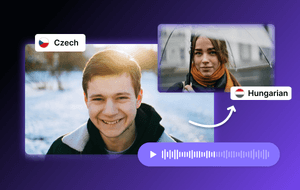
AI Video Translator, Localization, and Dubbing Tool
Try it out for Free
If you’re producing videos, your main goal is simple: you want as many people as possible to watch them. One of the most effective ways to make that happen is to offer your content in more than one language. Right now, there is a big, underserved audience in Central Europe, and this guide will show you how to tap into it using the Perso Dubbing tool.
Instead of relying on old, complicated workflows, you can use Perso Dubbing to quickly adapt your existing Czech or Hungarian videos so they can immediately reach the other side of that market.
Why This Matters: The Opportunity in Czech and Hungarian
If you’re trying to grow a brand or increase your influence, it doesn’t make sense to stay limited to a single language. Translating your videos into Czech and Hungarian gives you access to a large, engaged audience that strongly prefers content in their native tongue.
Here’s the basic reach:
Over 10 million people speak Czech.
Around 14 million people speak Hungarian worldwide.
The Hungarian market is especially interesting because Hungarian speakers aren’t only in Hungary. You’ll find them across Romania, Slovakia, Serbia, the U.S., Canada, and Australia. With a single translated video, you can reach a global Hungarian-speaking diaspora.
This audience is especially valuable for your content because:
Unique Cultural Connection: Hungarian is a distinctive language (not part of the Indo-European family), and its speakers are very responsive to high-quality content in their own language. This builds deeper trust and a more personal connection.
Digital Growth: Internet and smartphone usage in Central Europe continues to grow, which means video consumption is rising as well. Your multilingual videos sit right in the middle of that trend.
Social Media Ready: Platforms like YouTube, Instagram, and TikTok fully support Hungarian content, so your dubbed videos are ready to post where people are already watching.
The Problem With “The Old Way” of Doing Things
Before AI tools became practical, video translation was a real headache.
Typically, you had to:
Hire professional human translators
Find voice actors for dubbing
Work with video editors who could handle lip-sync
Wait weeks or even months for the final version
This process was slow, expensive, and hard to scale. For small businesses or independent creators, it often wasn’t realistic at all.
The bottom line: you don’t have time for that. You need a solution that is fast, cost-effective, and still keeps the original tone and energy of your video intact.
The Solution: Translate Your Video in 3 Simple Steps
Here’s where Perso Dubbing comes in. It makes the whole process easier than dealing with a long email thread. You get highly accurate translations, natural-sounding voices, and smooth lip-sync in one place.
Follow this quick workflow to translate a Czech video into Hungarian (or the other way around):
Go to the Site: Open the Perso Dubbing Video Translator.
Upload or Add a Link: Either upload your video file directly or paste in a social media link (it can translate directly from a link).
Translate:
- Choose your target language (for example, Hungarian).
- Optionally, turn on the lip-sync feature for a more seamless appearance.
- Click TRANSLATE.
That’s it.
You can start for free and see the results for yourself. There’s no reason to stay stuck with a limited audience. Follow these steps and begin opening up a much larger market for your content today.
If you’re producing videos, your main goal is simple: you want as many people as possible to watch them. One of the most effective ways to make that happen is to offer your content in more than one language. Right now, there is a big, underserved audience in Central Europe, and this guide will show you how to tap into it using the Perso Dubbing tool.
Instead of relying on old, complicated workflows, you can use Perso Dubbing to quickly adapt your existing Czech or Hungarian videos so they can immediately reach the other side of that market.
Why This Matters: The Opportunity in Czech and Hungarian
If you’re trying to grow a brand or increase your influence, it doesn’t make sense to stay limited to a single language. Translating your videos into Czech and Hungarian gives you access to a large, engaged audience that strongly prefers content in their native tongue.
Here’s the basic reach:
Over 10 million people speak Czech.
Around 14 million people speak Hungarian worldwide.
The Hungarian market is especially interesting because Hungarian speakers aren’t only in Hungary. You’ll find them across Romania, Slovakia, Serbia, the U.S., Canada, and Australia. With a single translated video, you can reach a global Hungarian-speaking diaspora.
This audience is especially valuable for your content because:
Unique Cultural Connection: Hungarian is a distinctive language (not part of the Indo-European family), and its speakers are very responsive to high-quality content in their own language. This builds deeper trust and a more personal connection.
Digital Growth: Internet and smartphone usage in Central Europe continues to grow, which means video consumption is rising as well. Your multilingual videos sit right in the middle of that trend.
Social Media Ready: Platforms like YouTube, Instagram, and TikTok fully support Hungarian content, so your dubbed videos are ready to post where people are already watching.
The Problem With “The Old Way” of Doing Things
Before AI tools became practical, video translation was a real headache.
Typically, you had to:
Hire professional human translators
Find voice actors for dubbing
Work with video editors who could handle lip-sync
Wait weeks or even months for the final version
This process was slow, expensive, and hard to scale. For small businesses or independent creators, it often wasn’t realistic at all.
The bottom line: you don’t have time for that. You need a solution that is fast, cost-effective, and still keeps the original tone and energy of your video intact.
The Solution: Translate Your Video in 3 Simple Steps
Here’s where Perso Dubbing comes in. It makes the whole process easier than dealing with a long email thread. You get highly accurate translations, natural-sounding voices, and smooth lip-sync in one place.
Follow this quick workflow to translate a Czech video into Hungarian (or the other way around):
Go to the Site: Open the Perso Dubbing Video Translator.
Upload or Add a Link: Either upload your video file directly or paste in a social media link (it can translate directly from a link).
Translate:
- Choose your target language (for example, Hungarian).
- Optionally, turn on the lip-sync feature for a more seamless appearance.
- Click TRANSLATE.
That’s it.
You can start for free and see the results for yourself. There’s no reason to stay stuck with a limited audience. Follow these steps and begin opening up a much larger market for your content today.
If you’re producing videos, your main goal is simple: you want as many people as possible to watch them. One of the most effective ways to make that happen is to offer your content in more than one language. Right now, there is a big, underserved audience in Central Europe, and this guide will show you how to tap into it using the Perso Dubbing tool.
Instead of relying on old, complicated workflows, you can use Perso Dubbing to quickly adapt your existing Czech or Hungarian videos so they can immediately reach the other side of that market.
Why This Matters: The Opportunity in Czech and Hungarian
If you’re trying to grow a brand or increase your influence, it doesn’t make sense to stay limited to a single language. Translating your videos into Czech and Hungarian gives you access to a large, engaged audience that strongly prefers content in their native tongue.
Here’s the basic reach:
Over 10 million people speak Czech.
Around 14 million people speak Hungarian worldwide.
The Hungarian market is especially interesting because Hungarian speakers aren’t only in Hungary. You’ll find them across Romania, Slovakia, Serbia, the U.S., Canada, and Australia. With a single translated video, you can reach a global Hungarian-speaking diaspora.
This audience is especially valuable for your content because:
Unique Cultural Connection: Hungarian is a distinctive language (not part of the Indo-European family), and its speakers are very responsive to high-quality content in their own language. This builds deeper trust and a more personal connection.
Digital Growth: Internet and smartphone usage in Central Europe continues to grow, which means video consumption is rising as well. Your multilingual videos sit right in the middle of that trend.
Social Media Ready: Platforms like YouTube, Instagram, and TikTok fully support Hungarian content, so your dubbed videos are ready to post where people are already watching.
The Problem With “The Old Way” of Doing Things
Before AI tools became practical, video translation was a real headache.
Typically, you had to:
Hire professional human translators
Find voice actors for dubbing
Work with video editors who could handle lip-sync
Wait weeks or even months for the final version
This process was slow, expensive, and hard to scale. For small businesses or independent creators, it often wasn’t realistic at all.
The bottom line: you don’t have time for that. You need a solution that is fast, cost-effective, and still keeps the original tone and energy of your video intact.
The Solution: Translate Your Video in 3 Simple Steps
Here’s where Perso Dubbing comes in. It makes the whole process easier than dealing with a long email thread. You get highly accurate translations, natural-sounding voices, and smooth lip-sync in one place.
Follow this quick workflow to translate a Czech video into Hungarian (or the other way around):
Go to the Site: Open the Perso Dubbing Video Translator.
Upload or Add a Link: Either upload your video file directly or paste in a social media link (it can translate directly from a link).
Translate:
- Choose your target language (for example, Hungarian).
- Optionally, turn on the lip-sync feature for a more seamless appearance.
- Click TRANSLATE.
That’s it.
You can start for free and see the results for yourself. There’s no reason to stay stuck with a limited audience. Follow these steps and begin opening up a much larger market for your content today.
Continue Reading
Browse All