
洞察與趨勢

AI 翻譯和文本轉語音如何改變韓國媒體

人工智能視頻翻譯、定位和配音工具

免費試用

跳到部分

跳到部分

分享

分享

分享

South Korea has always excelled at blending technology and culture.
Hologram K-pop performances, esports arenas that feel like full concerts, and immersive entertainment formats all highlight the country’s innovative spirit.

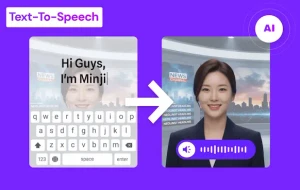
Today, Korean media is entering another major shift — one powered by text-to-speech (TTS) and AI-generated voices.

Why text-to-speech, and why now?

Content is being created at an unprecedented speed.
But the bigger challenge is how quickly content becomes outdated.

Meanwhile:

  • Short-form videos dominate

  • Many viewers prefer listening over reading subtitles

  • Major platforms continue going global

Together, these trends are making text-to-speech a core part of modern media workflows.

AI News Anchors: A New Chapter for Broadcasting

In 2020, Korean broadcaster MBN introduced an AI version of journalist Kim Ju-ha.
Her appearance and voice were natural enough to make viewers look twice.

Why are broadcasters adopting AI voice technology?

Benefits of AI News Anchors

  • Consistency: No mistakes, fatigue, or tone shifts

  • Speed: Instant delivery of breaking news

  • Efficiency: One trained voice model → multiple languages

TTS isn’t replacing journalists — it’s extending the reach of the newsroom.

Virtual Idols and Influencers Are Going Mainstream

Korea now has AI-powered digital celebrities who function much like human influencers.
A well-known example is Rozy, who appears in high-profile brand campaigns and maintains a large online following.

Their appeal includes:

  • Always being “on”

  • Synthetic voices capable of conveying emotion

  • No physical or scheduling limitations

  • Ability to communicate in multiple languages using text-to-speech

These figures blur the line between digital and human entertainment.

The Question of Voice Ownership

As TTS technology advances, important ethical questions arise:

  • How is voice data collected and used?

  • What if an AI voice closely resembles a real person?

  • Should the voice of a deceased artist be recreated?

This leads naturally to the issue of voice ownership.

If an AI can reproduce someone’s voice, who holds the rights — the person or the company?

Consent will play a critical role in the future of voice technology.

Curiosity vs. the Uncanny Valley

Some people are fascinated by AI voices, while others feel slightly uneasy — a reaction tied to the uncanny valley.

Still, curiosity often wins.
Many fans now follow both AI personalities and human creators, observing how technology reshapes pop culture.

AI Video Translation Makes Global Reach Easier

With text-to-speech combined with accurate AI lip-sync,
Korean creators can now reach international audiences instantly.

A single video can speak:

without the creator recording multiple versions.

Where Perso AI Fits In

As TTS becomes mainstream, Perso AI offers a simple, intuitive platform
that helps creators, brands, and media teams adopt this technology quickly.

Perso AI goes beyond basic text-to-speech by providing:

Why Creators Choose Perso AI

  • Natural, expressive AI voice generation

  • Emotion, tone, pacing that feel human

  • Clear preservation of speaker identity

  • Multilingual lip-synced video output

  • A workflow anyone can use — no engineering required

Creators often describe it like this:

“It felt surreal hearing myself speak another language — but still sounding like me.”

Perso AI helps creators expand globally
while staying true to their voice and personality.

The Future of text-to-speech in Korea

AI isn’t replacing human creativity — it’s amplifying it.
Korea’s media landscape shows just how powerful this combination can be.

With tools like Perso AI, anyone can create content once and
communicate it across multiple languages, naturally and instantly.

The future belongs to creators and brands that can
speak to the world with a single piece of content.

South Korea has always excelled at blending technology and culture.
Hologram K-pop performances, esports arenas that feel like full concerts, and immersive entertainment formats all highlight the country’s innovative spirit.

Today, Korean media is entering another major shift — one powered by text-to-speech (TTS) and AI-generated voices.

Why text-to-speech, and why now?

Content is being created at an unprecedented speed.
But the bigger challenge is how quickly content becomes outdated.

Meanwhile:

  • Short-form videos dominate

  • Many viewers prefer listening over reading subtitles

  • Major platforms continue going global

Together, these trends are making text-to-speech a core part of modern media workflows.

AI News Anchors: A New Chapter for Broadcasting

In 2020, Korean broadcaster MBN introduced an AI version of journalist Kim Ju-ha.
Her appearance and voice were natural enough to make viewers look twice.

Why are broadcasters adopting AI voice technology?

Benefits of AI News Anchors

  • Consistency: No mistakes, fatigue, or tone shifts

  • Speed: Instant delivery of breaking news

  • Efficiency: One trained voice model → multiple languages

TTS isn’t replacing journalists — it’s extending the reach of the newsroom.

Virtual Idols and Influencers Are Going Mainstream

Korea now has AI-powered digital celebrities who function much like human influencers.
A well-known example is Rozy, who appears in high-profile brand campaigns and maintains a large online following.

Their appeal includes:

  • Always being “on”

  • Synthetic voices capable of conveying emotion

  • No physical or scheduling limitations

  • Ability to communicate in multiple languages using text-to-speech

These figures blur the line between digital and human entertainment.

The Question of Voice Ownership

As TTS technology advances, important ethical questions arise:

  • How is voice data collected and used?

  • What if an AI voice closely resembles a real person?

  • Should the voice of a deceased artist be recreated?

This leads naturally to the issue of voice ownership.

If an AI can reproduce someone’s voice, who holds the rights — the person or the company?

Consent will play a critical role in the future of voice technology.

Curiosity vs. the Uncanny Valley

Some people are fascinated by AI voices, while others feel slightly uneasy — a reaction tied to the uncanny valley.

Still, curiosity often wins.
Many fans now follow both AI personalities and human creators, observing how technology reshapes pop culture.

AI Video Translation Makes Global Reach Easier

With text-to-speech combined with accurate AI lip-sync,
Korean creators can now reach international audiences instantly.

A single video can speak:

without the creator recording multiple versions.

Where Perso AI Fits In

As TTS becomes mainstream, Perso AI offers a simple, intuitive platform
that helps creators, brands, and media teams adopt this technology quickly.

Perso AI goes beyond basic text-to-speech by providing:

Why Creators Choose Perso AI

  • Natural, expressive AI voice generation

  • Emotion, tone, pacing that feel human

  • Clear preservation of speaker identity

  • Multilingual lip-synced video output

  • A workflow anyone can use — no engineering required

Creators often describe it like this:

“It felt surreal hearing myself speak another language — but still sounding like me.”

Perso AI helps creators expand globally
while staying true to their voice and personality.

The Future of text-to-speech in Korea

AI isn’t replacing human creativity — it’s amplifying it.
Korea’s media landscape shows just how powerful this combination can be.

With tools like Perso AI, anyone can create content once and
communicate it across multiple languages, naturally and instantly.

The future belongs to creators and brands that can
speak to the world with a single piece of content.

繼續閱讀

瀏覽全部

Dopiverse 標誌圖片
Customer Stories

Dopiverse 使用 Perso AI 自動化製作八種語言的應用內教育影片

Hyeram Lee

業務發展

首爾國立大學標誌與數位地球圖形
Customer Stories

首爾國立大學使用 Perso AI 將大數據本地化成本削減了 60%

Hyeram Lee

業務發展

Image of How to Avoid Compliance Risks
Responsible AI

企業 AI 配音合規性:隱私、治理和風險控制

SEO內容寫手和AI內容專家Sarwat Mashab

Sarwat Mashab

AI 內容專家

}